Recently, the Department of Spleen and Stomach Diseases at Hebei Yiling Hospital successfully controlled infection and improved symptoms for a patient with acute appendicitis complicated by perforation through Endoscopic Retrograde Appendicitis Therapy (ERAT). This timely intervention prevented life-threatening complications such as septic shock. Yan Xiaohong, Chief Physician of the Department of Spleen and Stomach Diseases at Hebei Yiling Hospital, reminds that when experiencing migratory pain in the right lower abdomen, especially accompanied by nausea, vomiting, or loss of appetite, appendicitis should be considered and medical attention sought promptly to avoid worsening infection, multiple complications, or even life-threatening risks. For patients with severe infection who have lost the opportunity for surgery, minimally invasive methods such as ERAT can provide effective treatment.
Patient waited three days after abdominal pain before seeking medical care; examination revealed perforation
Mr. Zhang sought hospital care three days after experiencing abdominal pain and fever. He recalled that the pain in his lower abdomen began suddenly after a meal, accompanied by intermittent nausea, vomiting, and loss of appetite. His temperature peaked at 39°C. Initially, he thought it was gastrointestinal discomfort caused by improper diet and self-medicated with gastrointestinal regulators. However, after three days, his symptoms worsened, with increasing pain in the right lower abdomen and persistent high fever. Concerned, Mr. Zhang rushed to the hospital for professional diagnosis and treatment. Blood tests showed significantly elevated white blood cells and C-reactive protein levels. Combined with CT scans, he was ultimately diagnosed with acute suppurative appendicitis.

Appendicitis can be acute or chronic. Typically, acute appendicitis presents with severe abdominal pain, nausea, vomiting, and other classic symptoms. Once diagnosed, prompt surgical removal is recommended. Without timely treatment, acute appendicitis may progress to chronic appendicitis, prone to recurrence, and can be complicated by multiple conditions that exacerbate inflammation and cause suppuration. Patients risk perforation, peritonitis, and even sepsis, all of which threaten life.
Because Mr. Zhang delayed seeking care for three days after symptom onset, he developed high fever and worsening inflammation. Considering the presence of a peri-appendiceal abscess, surgical treatment was not feasible. Yan Xiaohong, Chief Physician of the Department of Spleen and Stomach Diseases at Hebei Yiling Hospital, explained that the typical symptom of appendicitis is migratory pain to the right lower abdomen. Simply put, pain initially occurs in the abdomen and gradually shifts to the right lower quadrant. Other symptoms may include loss of appetite, nausea, vomiting, and diarrhea. When inflammation worsens or perforation occurs, high fever may develop. At the onset of such symptoms, appendicitis should be suspected and prompt medical attention sought; delays must be avoided.
Worsening infection with peri-appendiceal abscess; endoscopic treatment improves symptoms and relieves obstruction
Due to the prolonged disease course, Mr. Zhang lost the opportunity for surgery. Typically, drainage is used to help evacuate pus and relieve symptoms. However, Mr. Zhang also has severe diabetes, and hyperglycemia could impair wound healing after surgical drainage. Led by Chief Physician Yan Xiaohong, the medical team at Hebei Yiling Hospital’s Department of Spleen and Stomach Diseases carefully analysed his condition. With family consent, they developed a treatment plan using Endoscopic Retrograde Appendicitis Therapy (ERAT). This approach, suitable for acute suppurative appendicitis with peri-appendiceal abscess, preserves the appendix and resolves inflammation. During colonoscopic entry, the doctors found the appendiceal orifice narrowed and obstructed due to inflammation, with severe surrounding mucosal oedema. They used a snare to electrically incise the appendiceal opening, inserted a guidewire into the appendiceal lumen, and dilated the orifice with a balloon catheter. A large amount of pus was released, followed by repeated saline irrigation. Postoperatively, Mr. Zhang recovered well, with no abdominal pain or fever, and all tests returned to normal.
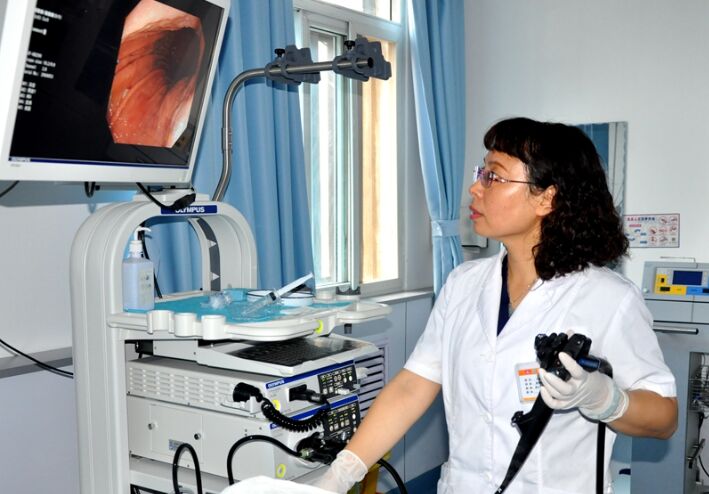
Chief Physician Yan Xiaohong explained that the appendix communicates with the colon and ends blindly. Normally, the appendiceal orifice contracts, preventing foreign bodies from entering. However, after eating, vigorous exercise, or other special circumstances, food residues, faecaliths, or stones may enter and become trapped or obstruct the lumen, triggering inflammation. ERAT involves inserting a colonoscope through the anus, navigating the intestinal tract, then placing a catheter and guidewire into the appendiceal lumen to perform irrigation, removal of faecaliths, and drainage. This clears foreign bodies and secretions, eliminating the cause of inflammation and relieving pain and other symptoms, thus achieving therapeutic effect. If faecaliths are present, stone retrieval balloon catheters or stone retrieval baskets can be used via colonoscopy to extract them, followed by thorough irrigation. If the appendiceal orifice is narrowed and drainage is poor, stents can be placed endoscopically to facilitate drainage.
Non-invasive endoscopic treatment of appendicitis offers patients more recovery opportunities
ERAT is a newly developed innovative treatment for appendicitis. Compared to laparoscopic minimally invasive surgery, ERAT is considered “non-invasive” as it uses natural orifices such as the anus to insert the endoscope. It is simpler, does not require abdominal incisions or appendix removal, causes minimal trauma, leaves no scars, and allows patients to recover in the shortest time while preserving the intact appendix. Previously, the appendix was thought to be a redundant organ and was sometimes removed prophylactically during other abdominal surgeries to prevent appendicitis. Later, it was recognised as an important immune organ; loss of the appendix is associated with a sharp increase in colon cancer incidence. Therefore, preserving the appendix has become an important concept. Chief Physician Yan Xiaohong stated that compared to surgery, ERAT has a broader range of indications. Except for severe abdominal infections or patients unable to undergo colonoscopy, most acute and chronic appendicitis cases can be treated with this method, providing more recovery opportunities for appendicitis patients.
Additionally, ERAT allows for intestinal examination because it requires colonoscopic access through the bowel. Thus, during appendicitis treatment, colonoscopy can also be performed. If polyps are found, they can be promptly removed; if internal haemorrhoids are detected, endoscopic foam sclerotherapy can be administered. Chief Physician Yan Xiaohong recommends that middle-aged individuals over 40 undergo annual colonoscopy screenings, which are crucial for early diagnosis and treatment of intestinal diseases. With advances in medical technology, modern painless colonoscopy causes minimal discomfort, so there is no need to avoid screening due to fear of pain.
— Excerpted from Hebei News Network, 27 July 2023