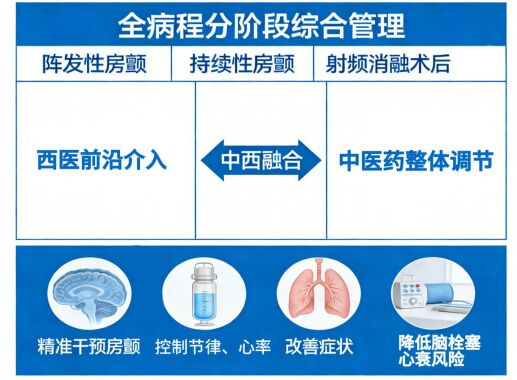
Irregular heartbeats that lose their original rhythm are known as arrhythmias. When a patient experiences both fast heartbeats (tachyarrhythmias) and slow heartbeats (bradyarrhythmias) simultaneously, this is classified as complex arrhythmia. Medication treatment in such cases often presents contradictions, leading to situations where “no suitable drugs are available.” Surgical interventions such as cardiac pacemaker implantation and radiofrequency ablation are frequently required to regulate the heart rate. However, due to factors like age and underlying diseases, some patients with complex arrhythmias are not candidates for surgery. To maximally alleviate patient symptoms and offer more treatment options, the Cardiovascular Department of Hebei Yiling Hospital—designated as a National Key Clinical Specialty of Traditional Chinese Medicine by the National Health Commission and a National Regional TCM Cardiovascular Disease Diagnosis and Treatment Center—leverages its integrated Chinese-Western medicine expertise. Guided by the traditional Chinese medicine collateral-disease theory, it has pioneered an effective new approach to treating arrhythmias, shifting from “anti-arrhythmia” to “rhythm regulation.” This involves syndrome differentiation and prescription formulation, integrated regulation, simultaneous treatment of fast and slow rhythms, and symptom improvement.
Dizziness, palpitations, and fainting may indicate severe arrhythmia.
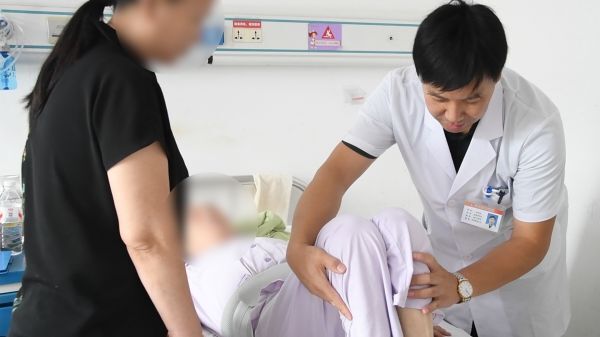
For complex and severe arrhythmias such as cardiac arrest and atrial fibrillation, aside from pacemaker implantation, are there better conservative treatment options? In response, the Cardiovascular Department of Hebei Yiling Hospital has applied syndrome differentiation and collateral therapy with traditional Chinese medicine, delivering satisfactory outcomes for patients. Recently, the department treated an 85-year-old patient with severe sick sinus syndrome using oral Chinese herbal decoctions combined with acupuncture. Within half a month, the patient’s dizziness and palpitations were significantly alleviated, and both the duration and frequency of cardiac arrest episodes were markedly reduced.
According to reports, Mr. Wu is a long-term cardiovascular patient who has been taking medications for coronary heart disease, heart failure, and hypertension. Recently, his symptoms worsened, frequently experiencing dizziness, blurred vision, palpitations, and profuse sweating. He even suffered transient loss of consciousness and fainting. After consultations at multiple hospitals, he was advised to undergo permanent pacemaker implantation as soon as possible. However, considering his advanced age and multiple underlying conditions, Mr. Wu was reluctant to have a pacemaker implanted. Ultimately, he came to Hebei Yiling Hospital seeking more effective conservative treatment options.
Given the severity of Mr. Wu’s condition, the Cardiovascular Department admitted him to the third inpatient ward for comprehensive examination and treatment. A 24-hour Holter monitor revealed that upon admission, Mr. Wu not only had atrial fibrillation but also experienced long pauses indicating cardiac arrest, with the longest pause lasting 10.18 seconds. His episodes of transient loss of consciousness were linked to cerebral ischemia caused by these cardiac arrests. He was ultimately diagnosed with sick sinus syndrome (dual-node disease) combined with atrial fibrillation. Because he simultaneously exhibited cardiac arrest and paroxysmal atrial fibrillation, his condition was classified as tachy-brady syndrome (bradycardia-tachycardia syndrome).
Arrhythmias with alternating fast and slow heartbeats can cause sudden death; treatment must be comprehensive and balanced.
Under normal circumstances, the heartbeat rhythm should be regular and steady, with an adult heart rate of 60 to 100 beats per minute. When the heartbeat loses its original rhythmicity and becomes too slow, too fast, or irregular in speed and strength, it is medically termed arrhythmia. Arrhythmias are broadly divided into tachyarrhythmias and bradyarrhythmias. Tachyarrhythmias include various premature beats, tachycardias, flutter, and fibrillation; bradyarrhythmias include cardiac arrest, conduction block, and bradycardia. Long-term irregular heartbeats impair the heart’s ability to pump blood effectively, affecting hemodynamics and the function of vital organs such as the heart, brain, and kidneys, especially in elderly patients. Moreover, arrhythmias can induce or worsen cardiovascular and cerebrovascular diseases. For example, patients with chronic atrial fibrillation are more prone to thrombus formation, which can dislodge and cause blockages leading to myocardial infarction, cerebral infarction, or even sudden death. Patients with bradyarrhythmias may suffer from insufficient blood supply due to slow or paused heartbeats, severely impacting daily life and potentially threatening life.
In cases like Mr. Wu’s tachy-brady syndrome, where cardiac arrest coexists with atrial fibrillation, the patient experiences alternating bradycardia and atrial tachyarrhythmias. This not only carries risks of thrombosis and insufficient blood supply but also complicates treatment. Wang Lei, Chief Physician of the third Cardiovascular Inpatient Ward at Hebei Yiling Hospital, explains that treatments for tachyarrhythmias and bradyarrhythmias are fundamentally opposite. For patients with tachy-brady syndrome, this creates a therapeutic dilemma: medications that slow the heart rate to relieve symptoms caused by rapid atrial fibrillation may worsen bradycardia, potentially causing cardiac arrest and cerebral ischemia. This can lead to dizziness, blurred vision, fainting, falls, and in severe cases, sudden death. Furthermore, there are currently no clearly effective Western medicines for bradyarrhythmias combined with atrial fibrillation. Therefore, treatment must comprehensively address both slow and fast heart rhythms. The most effective current approach is pacemaker implantation to maintain basic sinus rhythm, combined with radiofrequency ablation and antiarrhythmic drugs to treat atrial fibrillation.
Syndrome differentiation and collateral therapy with Chinese herbal medicine provide integrated regulation, simultaneously treating fast and slow rhythms.
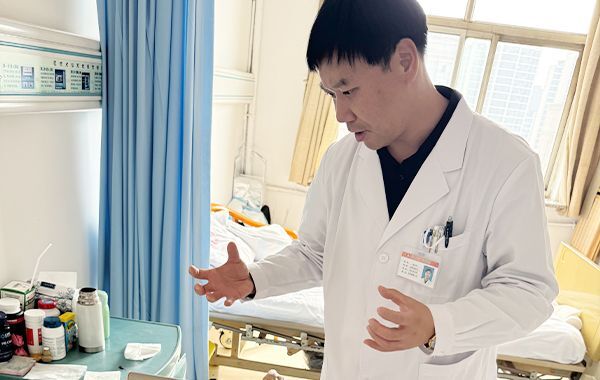
Although pacemaker implantation is a preferred treatment, many arrhythmia patients face challenges similar to Mr. Wu’s: advanced age, multiple or severe underlying diseases, and generally poor physical condition increase surgical risks. Additionally, patients often prefer conservative treatments. After understanding Mr. Wu’s specific condition and treatment preferences, doctors from the third Cardiovascular Inpatient Ward consulted Professor Jia Zhenhua, hospital director and cardiovascular expert, to conduct syndrome differentiation and treatment from a traditional Chinese medicine perspective.
Professor Jia Zhenhua carefully diagnosed Mr. Wu’s condition as heart and kidney yang deficiency with collateral deficiency. He prescribed a modified version of the traditional Tongbu Fang for atrial fibrillation, which tonifies heart and kidney yang and nourishes the collaterals, combined with acupuncture and Shen Song Yang Xin capsules. To better improve symptoms, Professor Jia adjusted Mr. Wu’s herbal formula approximately every three days according to his changing condition. After one week of treatment, a repeat 24-hour Holter monitor showed a reduction in cardiac arrest episodes and the longest pause decreased to 2.73 seconds; atrial fibrillation spontaneously reverted to sinus rhythm. After half a month, further monitoring revealed that pauses longer than two seconds dropped from 1,571 to 132 episodes. Throughout treatment, Mr. Wu’s symptoms steadily improved, and he no longer experienced discomfort except occasional chest tightness and palpitations.
Professor Jia Zhenhua points out that Western medications for arrhythmias have limited efficacy and notable side effects. For diseases like tachy-brady syndrome, treatment contradictions often arise, sometimes resulting in a “no drug available” scenario. Faced with these urgent challenges, traditional Chinese medicine—with its multi-pathway, multi-target integrated regulatory approach—offers simultaneous treatment of fast and slow rhythms, providing new ideas for arrhythmia management. Hebei Yiling Hospital’s Cardiovascular Department applies the TCM collateral-disease theory to guide treatment of major cardiovascular diseases. In arrhythmia research, they propose “collateral deficiency” as a novel pathogenic mechanism and have established a treatment principle of “benefiting qi and nourishing yin, activating blood and unblocking collaterals, calming the heart and spirit.” They developed a new strategy called “integrated regulation—arrhythmia intervention,” pioneering an effective approach shifting from “anti-arrhythmia” to “rhythm regulation.” They have also developed a nationally approved Chinese patent medicine for arrhythmia treatment. Collateral therapy with Chinese herbs treats both fast and slow rhythms, and this integrated regulation significantly improves symptoms such as palpitations, shortness of breath, insomnia, and fatigue, bringing hope to arrhythmia patients.
— Article excerpted from Hebei News Network, 13 October 2023