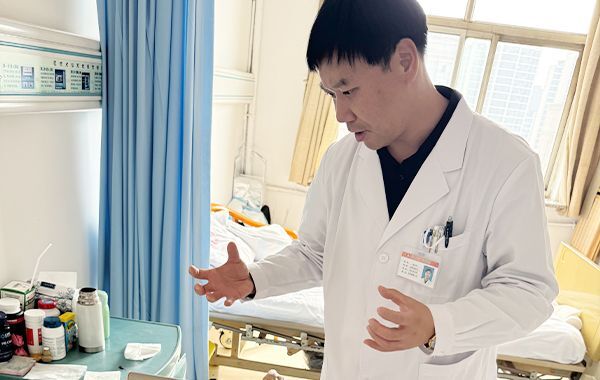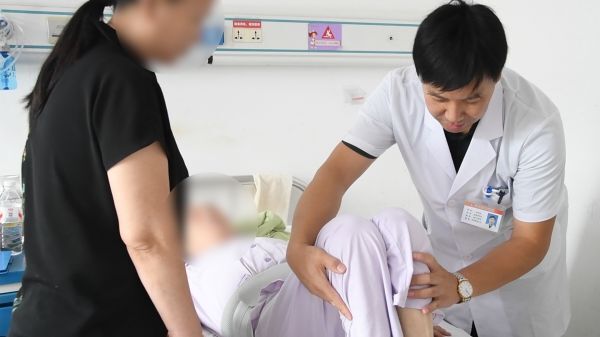
Myasthenia gravis is a complex disease, and factors such as infections can trigger or worsen the condition, leading to severe complications like respiratory distress and life-threatening situations. Recently, the Myasthenia Gravis Department at Hebei Yiling Hospital successfully rescued a patient whose respiratory failure was caused by a severe infection.
Building Confidence: Myasthenia Gravis Is Preventable and Treatable
Ms. Liu, just over 40 years old, has had myasthenia gravis for more than ten years. Since her diagnosis, she has continuously sought medical care. However, as the disease progressed, her symptoms of muscle atrophy and limb weakness became more pronounced, and she developed swallowing and speech difficulties, affecting her ability to eat and communicate normally. Seeking more effective treatment, Ms. Liu travelled a long distance from Liaoning to Hebei Yiling Hospital on the recommendation of fellow patients and was admitted to the hospital’s Myasthenia Gravis Department.
“Although myasthenia gravis is a complex disease, with awareness of prevention and timely, standardised, and effective early diagnosis and treatment, it remains preventable and treatable,” said Hu Junyong, Chief Physician of the Myasthenia Gravis Department at Hebei Yiling Hospital. Myasthenia gravis is a chronic disease caused by impaired neurotransmission at the neuromuscular junction, resulting in muscle weakness. It can affect muscle groups throughout the body, often presenting initially with ptosis (drooping eyelids). Symptoms include muscle weakness and easy fatigability, characterised by “morning lightness and evening heaviness,” meaning symptoms improve after rest or in the morning but worsen in the afternoon or after exertion. It can occur at any age. When the disease affects the tongue and pharyngeal muscles, patients experience swallowing difficulties, choking when drinking, and eating problems. If swallowing function does not improve, nutritional intake is compromised, leading to complications such as malnutrition and muscle atrophy. In severe cases, it may cause suffocation and threaten life.
Due to the nature of the disease, many myasthenia gravis patients lack confidence in treatment; Ms. Liu, who has been ill for many years, was no exception. Regarding this, Chief Physician Hu Junyong explained that there are now several mature medications and treatment methods for myasthenia gravis. As long as early diagnosis is made and effective treatment measures and standardised medication are implemented promptly, the condition can be controlled, and some mild cases may achieve complete recovery. Even refractory myasthenia gravis can be effectively improved through integrated Chinese and Western medicine treatment. Therefore, patients must build confidence in treatment and adhere to scientifically standardised integrated Chinese and Western medical approaches.
With the doctors’ patient explanations, Ms. Liu finally gained a comprehensive understanding of her condition. After syndrome-based application of traditional Chinese medicine, her symptoms such as limb weakness improved, and she gradually built treatment confidence, cooperating more actively with the doctors to implement the integrated Chinese and Western medicine treatment plan tailored for her.
Sudden Infection: Intensive Rescue to Turn Crisis into Safety
However, just as Ms. Liu’s symptoms improved, she suddenly developed a viral infection, resulting in high fever and severe respiratory failure. “The patient had long-term use of hormones and immunosuppressants, which reduce immunity and increase the risk of infection,” noted Chief Physician Hu Junyong. Ms. Liu’s infection was extremely severe, with lung imaging showing rapid progression of inflammatory lesions. Soon, she could no longer maintain adequate blood oxygen levels with non-invasive ventilation alone and was transferred to the intensive care unit, where tracheal intubation was performed to maintain respiratory function.
Due to the underlying myasthenia gravis, Ms. Liu’s respiratory muscle weakness worsened, and combined with severe lung infection, she was dependent on mechanical ventilation and had persistent high fever and copious sputum. Overall, the prognosis for successful rescue was low. “However, as long as there is a glimmer of hope, we will not give up,” said the medical staff in the intensive care unit at Hebei Yiling Hospital. They strengthened respiratory support and blood filtration therapy while collaborating with the Myasthenia Gravis Department doctors to develop a treatment plan. Based on Ms. Liu’s condition, they comprehensively applied integrated Chinese and Western medicine treatments, persistently carrying out antiviral, anti-infective, and immune reconstruction therapies. After more than a month of active treatment, Ms. Liu was finally able to breathe independently without the ventilator and was transferred from the ICU back to the Myasthenia Gravis Department for follow-up care.
Treatment Based on Collateral Theory: Integrated Chinese and Western Medicine Controls the Disease
Although returned to a general ward, Ms. Liu continued to have fever, and her myasthenia gravis severity score worsened, leaving her unable to care for herself. “Infections themselves are triggers for exacerbation or relapse of myasthenia gravis, and this patient also had other immune-related diseases, all contributing to symptom progression,” Chief Physician Hu Junyong reminded. Infection factors such as colds, pneumonia, or even gastrointestinal infections can worsen myasthenia gravis. Additionally, factors like chronic sleep deprivation, mental stress, poor environment, certain medications, and malnutrition may also aggravate the condition. Therefore, patients should increase their understanding of the disease and build awareness of prevention to avoid these triggers as much as possible.
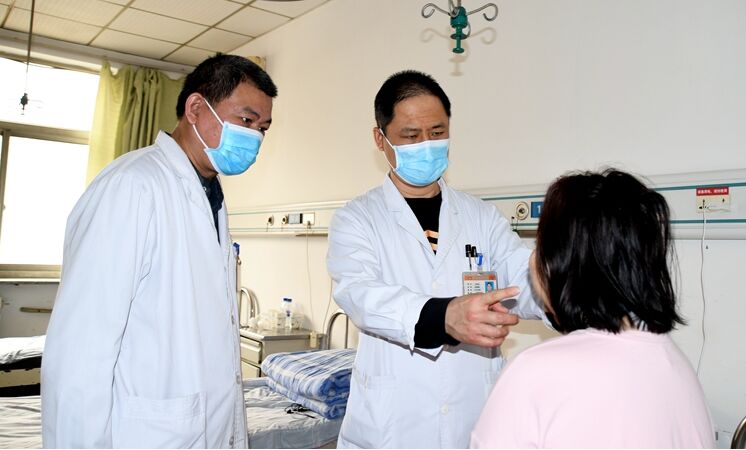
For Ms. Liu’s condition, Chief Physician Hu Junyong developed a treatment plan primarily based on traditional Chinese medicine. “This was mainly for two reasons. Firstly, the patient still had fever and infection, so the original treatment plan’s hormones and immunosuppressants were not significantly adjusted. Secondly, the syndrome differentiation theory of traditional Chinese medicine provides an effective treatment approach for complex diseases like myasthenia gravis.” Hu Junyong explained that under the guidance of Academician Wu Yiling’s collateral-disease theory, the Myasthenia Gravis Department at Hebei Yiling Hospital innovatively proposed that “deficiency of extraordinary yang and collapse of true essence” is the TCM pathogenesis of myasthenia gravis, with “deficiency and stagnation of collateral qi” as the main pathological link. They established a syndrome differentiation and treatment system based on “extraordinary meridian theory, differentiation of the five viscera, and treatment by Sanjiao division,” following the principle of “supporting the root and restoring withering, nourishing the muscles, and unblocking collateral qi.” This created an effective new approach to treating myasthenia gravis through qi and collateral therapy. For the pathogenesis of myasthenia gravis muscle atrophy, they formulated treatment principles of “warming and regulating extraordinary yang, supporting the root and uplifting collapse, and unblocking collateral qi,” selecting herbal formulas that tonify the extraordinary meridians and eight vessels. After years of clinical research and application, this approach has achieved good clinical efficacy.
“The greatest advantage of traditional Chinese medicine treatment lies in syndrome differentiation,” said Chief Physician Hu Junyong. The patient’s condition and symptoms constantly change, so treatment must monitor these changes and adjust the herbal formula and medication accordingly. For example, Ms. Liu initially presented with spleen and kidney deficiency syndrome and was treated to tonify the spleen and kidneys; later, with insufficient primordial qi, treatment focused on supporting the root and restoring withering; when high fever persisted and lung symptoms appeared, the syndrome was identified as heat toxin accumulating in the lungs, requiring heat clearing and detoxification; after infection was controlled, the patient showed qi and yin deficiency, necessitating qi tonification and yin nourishment. Under the careful management of the Myasthenia Gravis Department medical staff, Ms. Liu’s body temperature finally returned to normal, limb strength improved significantly, and she regained the ability to care for herself upon discharge.
Chief Physician Hu Junyong reminded that treatment of myasthenia gravis remains challenging, and patients often require long-term medication to maintain treatment status. Therefore, even if symptoms improve and patients are discharged, they must adhere to standardised treatment, strictly follow medical advice, avoid potential aggravating factors, and never reduce or stop medication on their own due to temporary symptom relief.
— Article excerpted from Hebei News Network, 28 August 2023