Reflecting on Thirty Years of Development: Grounded in Scientific Treatment Concepts, Guarding Confidence and Hope for Patients with Muscular Atrophy
On June 16, 2022, the Muscular Atrophy Department of Hebei Yiling Hospital will celebrate its 30th anniversary. Over three decades, the department has continuously advanced through exploration, consistently focusing on complex and difficult cases in the field of muscular atrophy. Undeterred by challenges and courageous in overcoming obstacles, it has innovated a distinctive therapy combining “Qiluo Theory Treatment,” differentiation of the five viscera, and treatment of the triple burner. Multiple research projects have reached internationally leading or advanced levels. Nearly 30 unique specialised formulations have been developed, attracting tens of thousands of patients from across China and over 20 countries and regions including the UK, US, Germany, and Russia. While standardising treatment, the department integrates sequential support, nursing, and rehabilitation measures, greatly improving patient symptoms, effectively controlling disease progression, prolonging life, and enhancing quality of life. This has brought hope to many muscular atrophy patients and established strong confidence in treatment.
Professional Focus: Thirty Years of Dedicated Muscular Atrophy Treatment
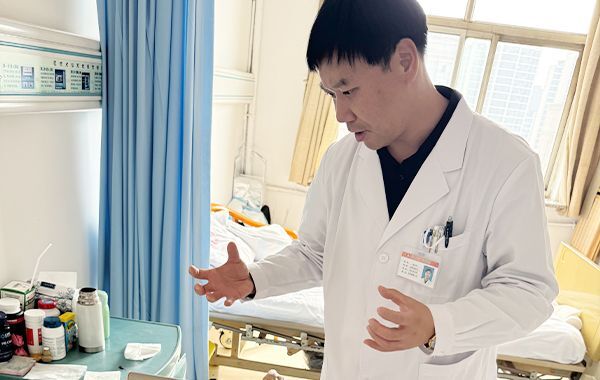
The Muscular Atrophy Department of Hebei Yiling Hospital was established in 1992, the same year as the hospital itself. “In fact, when Hebei Yiling Hospital was first founded, the very first department established was the Muscular Atrophy Department,” explained Li Jianjun, Chief Physician of the department. The hospital was founded by Academician Wu Yiling. At its inception, several muscular atrophy patients sought treatment, and their conditions were well controlled through traditional Chinese medicine (TCM) therapies. During the diagnosis and treatment of these patients, Wu Yiling realised that muscular atrophy-related diseases are complex and difficult to treat, with very few specialised treatment centres available. Patients often had to travel extensively seeking care. Motivated by a spirit of service and recognising the therapeutic potential of TCM, Wu Yiling first established the Muscular Atrophy Department.
Chief Physician Li Jianjun joined the Muscular Atrophy Department of Hebei Yiling Hospital in 1995 after graduating from university, witnessing almost the entire development trajectory of the department. At that time, research on rare and difficult diseases such as muscular atrophy was scarce. Whether in medical school textbooks or research papers, discussions on muscular atrophy treatment were very limited. The establishment of a dedicated muscular atrophy department at Yiling Hospital was pioneering in this field. Without mature experiences to reference, experts including Wu Yiling and Chen Jinliang led doctors to accumulate experience through individual case treatments, studied classical TCM texts, and gathered cutting-edge research from both domestic and international sources. They summarised findings bit by bit, continuously exploring and improving. “At that time, Academician Wu Yiling would summarise cases daily and compile them into volumes, frequently cross-referencing classical TCM texts or related literature, often working overtime until two or three in the morning,” recalled Chief Physician Li Jianjun. Inspired by Wu Yiling, the entire department was not only highly motivated but also grounded and focused on research and exploration of neuromuscular diseases. They strived to explore and overcome challenges in clinical practice, ultimately developing a unique and effective integrated Chinese-Western medicine treatment system. Upholding the pioneering spirit of the senior experts, the department also established a dedicated data centre preserving years of research materials and equipped with comprehensive information detection devices to access the latest domestic and international advances at any time.
Experience originates from clinical practice and must return to clinical verification to solve real patient problems. Leveraging the innovative “Qiluo Theory Treatment,” which combines oral medication, topical applications, rehabilitation, and nursing, the Muscular Atrophy Department of Hebei Yiling Hospital has helped countless patients control their conditions and improve symptoms. The outstanding therapeutic effects have earned the department an excellent reputation among muscular atrophy patients. To date, it has diagnosed and treated over 100,000 patients from both domestic and international locations, achieving favourable outcomes. From initially serving only a few patients, the department has expanded to occupy two floors of the inpatient building with 100 beds, often requiring patients to queue for admission. With growing strength, the department has gradually subdivided into Muscular Atrophy Departments I, II, and III.
After thirty years of development, the Muscular Atrophy Department of Hebei Yiling Hospital currently boasts 40 high-level professionals specialising in integrated Chinese-Western medicine. The department has been designated as a key specialty unit under the National Administration of Traditional Chinese Medicine’s 10th, 11th, and 12th Five-Year Plans, the Hebei Province TCM Muscular Atrophy Treatment Centre, a key TCM specialty in Hebei Province, a renowned specialty in Shijiazhuang City, a national continuing education base for TCM specialties under the Chinese Association of Traditional Chinese Medicine, and a progressive motor neuron disease assistance base under the Chinese Medical Doctor Association.
Qiluo Theory Treatment: Innovative Integrated Chinese-Western Medicine Breakthroughs
For thirty years, the Muscular Atrophy Department of Hebei Yiling Hospital has remained dedicated to exploring and treating complex muscular atrophy cases. It has developed leading clinical and research advantages in treating neuromuscular diseases such as motor neuron disease, myasthenia gravis, and muscular dystrophy. These treatment advantages stem from the department’s in-depth exploration and innovative application of the theories of extraordinary meridians and collaterals. Chief Physician Li Jianjun explained that the doctors seek distinctive therapies from classical TCM texts, based on discussions of extraordinary meridians and collaterals combined with clinical practice. They developed the “Qiluo Theory Treatment” principle, innovatively proposing the principles of “supporting the root to counter atrophy, nourishing to generate muscle, and benefiting qi to unblock collaterals,” with differentiation of the five viscera and triple burner treatment. They formulate targeted prescriptions and innovate characteristic therapies combining oral, topical, and rehabilitation treatments. These address symptoms such as difficulty swallowing, breathing difficulties, increased muscle tone, limb weakness, and emotional instability, achieving certain improvements or slowing disease progression.
For diseases such as myasthenia gravis, Guillain-Barré syndrome, multiple sclerosis, and peripheral neuropathy, the department targets pathological mechanisms including deficiency of the eight extraordinary meridians, depletion of true qi, loss of essence and marrow, and stagnation of collaterals. Treatment methods include tonifying extraordinary meridians, warming the Governing Vessel, replenishing essence and marrow, and regulating collaterals to improve symptoms. The department continuously optimises and expands treatment methods, tackling difficult points to reduce relapse rates.
For motor neuron disease, muscular dystrophy, spinal cord lesions, and related conditions, the department proposes treatment principles of supporting the root to counter atrophy and nourishing to generate muscle, applying extraordinary meridian theory to solve treatment challenges. They have developed a series of therapeutic drugs including Jiweiling, Zhongjiling, and Qilong Yiqi San, effectively relieving and improving symptoms such as respiratory difficulties and impaired limb movement in diseases like amyotrophic lateral sclerosis (ALS).
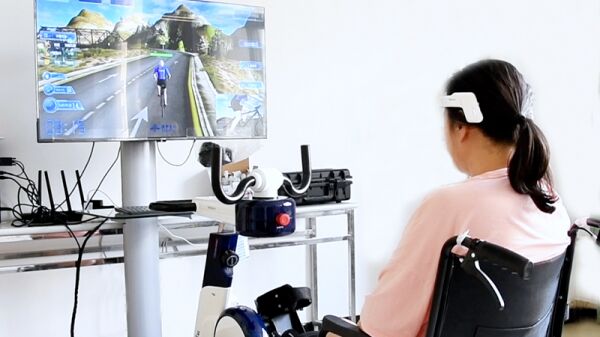
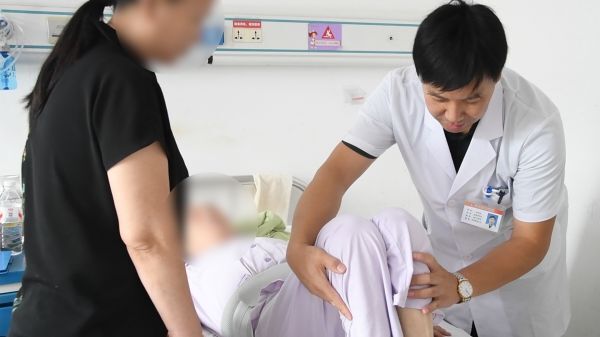
Guided by the theory of extraordinary meridians and collaterals, the department has developed 30 unique traditional Chinese medicine formulations for muscular atrophy, applied according to syndrome differentiation for different disease types or patterns. These are combined with acupuncture, acupoint injections, rectal therapies, sacral canal drip infusions, wax therapy, music therapy, topical ointments, and specialised instruments such as swallowing difficulty treatment devices, neuromuscular therapy devices, and non-invasive ventilators. This comprehensive approach targets improvements in swallowing, breathing, muscle strength, and psychological status, achieving integrated regulation, disease control, and delayed progression.
In 2018, when the National Administration of Traditional Chinese Medicine and the Chinese Association of Traditional Chinese Medicine formulated diagnostic and treatment methods for difficult diseases, the Muscular Atrophy Department of Hebei Yiling Hospital led the development of TCM clinical pathways and treatment protocols for motor neuron disease, myasthenia gravis, and progressive muscular dystrophy. These became authoritative national guidelines for TCM treatment of these diseases, fully demonstrating the department’s leading position among similar disciplines nationwide.
Guarding Hope: Establishing Scientific Treatment Concepts to Help Patients Control Disease and Return to Life
In muscular atrophy diseases, difficult conditions such as ALS, myasthenia gravis, and muscular dystrophy often progress progressively, gradually worsening and affecting basic functions like breathing and swallowing, ultimately threatening life. However, patients remain fully conscious throughout disease progression. This painful awareness of their own declining life often causes severe psychological distress, sometimes leading to despair and abandonment of treatment. Through years of clinical practice, the Muscular Atrophy Department of Hebei Yiling Hospital has fully recognised this issue. Therefore, it consistently advocates establishing a scientific treatment concept for muscular atrophy, meaning that alongside standardised treatment, doctors must help patients and their families correctly understand the disease. They emphasise that although ALS is a rare and difficult disease, early diagnosis and treatment, adherence to long-term standardised treatment, and correct nursing and rehabilitation can still achieve therapeutic effects. This helps patients build confidence in treatment and face the disease positively.
The establishment of treatment confidence arises from actual symptom improvement and enhanced quality of life, which depend on scientifically effective support measures and rehabilitation nursing. For example, some ALS medications are limited to use in specific disease stages or types but are often indiscriminately applied throughout the disease course. For ALS, beyond standard treatment, nursing measures such as diet, rehabilitation, and respiratory support must be adjusted according to different disease stages. Only when treatment and nursing are timely adapted to disease progression can patients truly benefit, achieving prolonged survival and improved quality of life. To this end, the department collaborated with the Chinese Medical Doctor Association to produce the “Practical Nursing Guide for ALS Patients” on CD, the first domestic nursing guide for ALS. In 2020, it released professional nursing videos providing expert guidance for ALS patients and their families. Earlier this year, the department also opened a specialised ALS nursing outpatient clinic to provide sequential supportive rehabilitation nursing, enhancing patients’ quality of life.
In March 2019, Hebei Yiling Hospital partnered with the Shanghai Dandelion ALS Rare Disease Care Centre to establish a green channel for patient consultations and jointly founded the “Warm Ice Ward – Gastrostomy Care Base.” This pioneering model provides ALS patients with humane, multidisciplinary integrated medical care, precise nutritional support, and modern assistive living devices. The “Warm Ice Ward” has also gradually become a communication platform for ALS patients to support and encourage one another.
In January 2022, after thorough preparation, the Muscular Atrophy Department of Hebei Yiling Hospital launched the “Let Love Go Home” initiative. Following the principle of sequential support, it guides medical treatment, rehabilitation, and nursing to help ALS patients achieve home care, promoting better social and life reintegration, reducing family financial burdens, and improving survival quality. Since the launch of “Let Love Go Home,” six ALS patients with tracheostomies have successfully returned to home care.
Compassionate Care: Public Welfare Activities Promote Awareness and Understanding of Rare Diseases
In 2018, the Muscular Atrophy Department of Hebei Yiling Hospital formally began collaboration with the Shanghai Dandelion ALS Rare Disease Care Centre. Leveraging their respective strengths, they organised activities such as the “Warm Ice Ward” and “Visiting Patients Over a Thousand Miles – Henan and Hebei” to provide patients with professional treatment and nursing guidance.
These represent only a portion of the public welfare activities conducted by the Muscular Atrophy Department of Hebei Yiling Hospital. Clinical experience has shown that due to the long course and difficulty of muscular atrophy diseases, many patients’ families bear significant financial burdens. To help more patients receive timely treatment and to raise societal awareness of muscular atrophy and other rare and difficult diseases, the department has long been committed to public welfare. Through cooperation with charitable organisations, treatment fee reductions, donations, and patient visits, it brings hope to muscular atrophy patients.
After thirty years of effort, the Muscular Atrophy Department at Hebei Yiling Hospital has achieved remarkable results. “But this is not the end; it is the starting point for us to reach higher standards of diagnosis and treatment and provide better quality services,” said Chief Physician Li Jianjun. The Muscular Atrophy Department at Hebei Yiling Hospital will focus on improving patients’ quality of life, extending lifespan, and alleviating suffering, while further deepening research and standardising diagnosis and treatment to assist more patients with muscular atrophy.