Recently, the Rehabilitation Department of Hebei Yiling Hospital was officially designated by the Multidisciplinary Collaboration Committee for Neuro-Critical Rehabilitation as the “Promotion Base for Multidisciplinary Collaborative Diagnosis and Treatment Model of Neuro-Critical Rehabilitation, Coma Arousal, and Pulmonary Rehabilitation.” This recognition affirms the department’s strengths in integrating Chinese and Western medicine for critical illness rehabilitation and strongly promotes the continuous development and enhancement of advanced rehabilitation models such as multidisciplinary collaboration and precision treatment, thereby helping more critically ill patients in need of rehabilitation to return to their families and social life.
From “Saving Lives” to “Returning to Life”: The Importance of Rehabilitation for Critical Illness
With the continuous advancement of medical technology, an increasing number of critically ill patients can have their lives saved. However, due to functional impairments, these patients often experience a decline in quality of life. For example, some patients with severe traumatic brain injury or stroke, although their vital signs can be maintained through treatment, suffer from varying degrees of consciousness disorders. Prolonged bed rest can lead to complications such as hypostatic pneumonia and aspiration pneumonia. Some patients require mechanical ventilation to maintain breathing and long-term hospitalization, which not only places a heavy burden on families but also makes social reintegration difficult.
Recognizing the challenges of rehabilitation for critical illnesses, the Rehabilitation Department of Hebei Yiling Hospital, a key TCM specialty in Hebei Province, a designated work injury rehabilitation institution at national, provincial, and municipal levels, a rehabilitation training base of the Hong Kong Occupational Therapy College, and the chair unit of the Hebei Province Committee for Integrated Chinese and Western Medicine Rehabilitation, advocates early intervention in rehabilitation treatment. By fully leveraging technical advantages, the department actively assists critically ill patients in functional recovery, reduces the occurrence of complications, and supports patients in returning to their families and society, thereby improving their quality of life.
Integrated Chinese and Western Medicine: Characteristic Precision Treatment to Promote Rehabilitation
The Rehabilitation Department of Hebei Yiling Hospital organically combines traditional Chinese rehabilitation methods with modern functional rehabilitation training, establishing a scientific, standardized, and systematic rehabilitation model integrating modern rehabilitation training, traditional Chinese medicine, and acupuncture physiotherapy. The rehabilitation outcomes are remarkable, with countless patients improving their bodily functions through systematic and comprehensive rehabilitation treatment. To help more patients achieve functional improvement and regain daily living abilities and social participation, the department continuously expands both the depth and breadth of its expertise. In addition to common rehabilitation for stroke and orthopedic injuries, various cranial injuries, spinal cord injuries, and peripheral nerve injuries can also be treated and improved in this department.
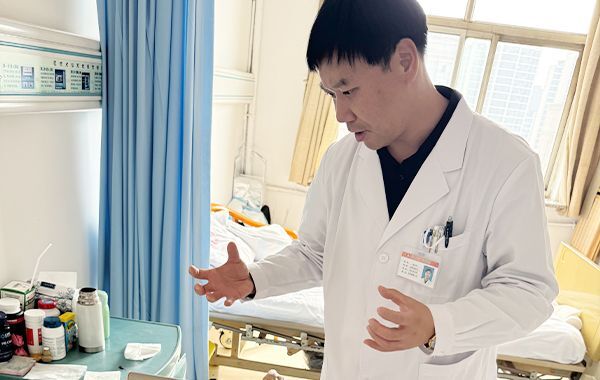
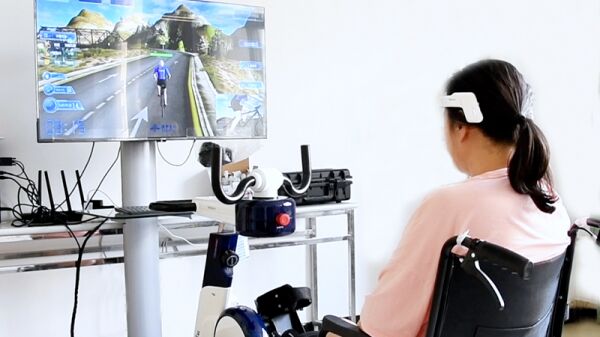
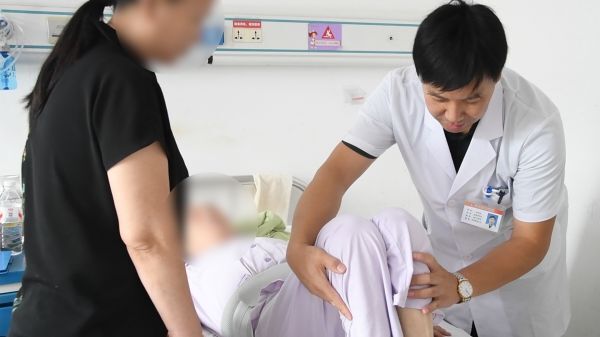
Li Hongxia, Director of the Disease Rehabilitation Ward in the Rehabilitation Department of Hebei Yiling Hospital, stated that for some critically ill patients with prolonged bed rest and chronic consciousness disorders, targeted integrated Chinese and Western medicine rehabilitation treatment plans are formulated based on the patient’s specific condition. Following a scientific and standardized rehabilitation process, treatment is progressive and comprehensive to improve various functional impairments. Through syndrome differentiation and treatment, combined with traditional Chinese herbal medicine, acupuncture for awakening the brain and resolving phlegm to open orifices, as well as TCM therapies such as tuina massage and medicinal baths, alongside modern neuroregulation techniques including repetitive transcranial magnetic stimulation, transcranial direct current stimulation, and median nerve electrical stimulation, the department achieves prevention of complications, coma arousal, early weaning from mechanical ventilation and extubation, and overall improvement of patient bodily functions.
Multidisciplinary Collaboration: Combining Strengths to Improve Quality of Life
“The conditions of critically ill patients are complex and not limited to a single disease; they often involve multiple disciplines such as neurology, cardiology, respiratory medicine, and critical care medicine. Therefore, to achieve ideal rehabilitation outcomes, it is essential to break down disciplinary barriers and realize effective multidisciplinary collaboration,” said Director Li Hongxia. To help patients receive more timely and effective rehabilitation, Hebei Yiling Hospital has implemented interdepartmental coordination within the hospital, conducting multidisciplinary joint consultations for critically ill patients to comprehensively assess their conditions and formulate more precise treatment and rehabilitation plans. For example, regarding the common issue of consciousness disorders in critically ill patients, the Rehabilitation Department collaborates actively with the Neurosurgery Department, using methods such as spinal cord electrical stimulation to promote consciousness improvement in some coma patients, thereby enhancing their quality of life and survival.
— Excerpted from Hebei News Network, July 29, 2024