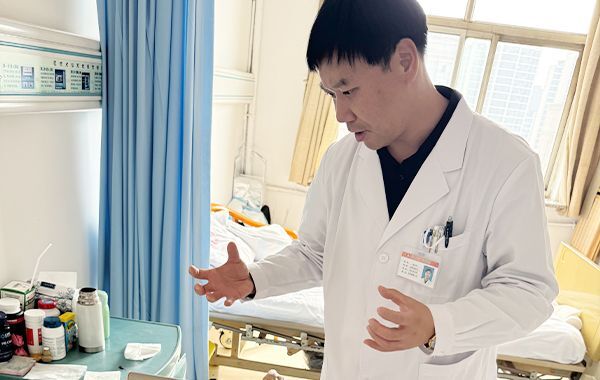
Mr. Li, now 75 years old, has a ruddy complexion and is full of vigour. When he speaks, he exudes confidence. No one would guess that this seemingly healthy elderly man has been battling cancer for fourteen years. From being diagnosed with highly malignant advanced cholangiocarcinoma to now living in “peaceful coexistence” with cancer, what has he experienced during this time? And what kind of treatment has helped him stabilise his condition? Liu Hanju, Chief of the Oncology Department at Hebei Yiling Hospital, stated: “With a clear diagnosis and timely, standardised treatment, patients with malignant tumours, especially those in the middle to late stages, can fully benefit from integrated Chinese and Western medicine comprehensive treatments such as minimally invasive interventional therapy combined with traditional Chinese medicine.”
Advanced Cholangiocarcinoma: Stent Intervention to Alleviate Symptoms
Around 2010, Mr. Li experienced physical discomfort and was diagnosed with cholangiocarcinoma. At the time of diagnosis, the disease was already at an advanced stage, making surgical treatment impossible. Chief Liu Hanju explained that early symptoms of cholangiocarcinoma are usually not obvious. When symptoms such as abdominal pain, jaundice, nausea, vomiting, and fever appear, the disease has often progressed to the middle or late stages. This is mainly due to the special anatomical location of the bile duct. Because the bile duct is situated deep within the body, symptoms are difficult to detect early. Symptoms only manifest when the tumour grows large enough to compress surrounding tissues or cause bile duct obstruction. Additionally, some cholangiocarcinomas are incidentally discovered during routine physical examinations. Even when symptoms like abdominal pain occur, patients often confuse them with gastritis or cholecystitis, which can delay diagnosis.
Malignant tumours at the terminal stage usually lose the opportunity for surgery, and even if surgery is possible, the five-year postoperative survival rate is very low. Understandably, Mr. Li was fearful and helpless when he saw his test results. Fortunately, after a consultation between the Oncology and Spleen-Stomach Departments at Hebei Yiling Hospital, a treatment plan involving bile duct stent intervention was developed for him. Bile duct stent intervention is similar to cardiovascular interventional therapy; it involves implanting a bile duct stent via minimally invasive surgery to physically relieve tumour-induced bile duct narrowing or obstruction, preventing bile duct blockage and thus maintaining bile duct patency and alleviating symptoms.
However, as the tumour grows, conventional bile duct stents can gradually become compressed, and the risk of bile duct obstruction remains. Therefore, about six months after the stent procedure, Mr. Li underwent another minimally invasive surgery at Hebei Yiling Hospital and began taking syndrome-differentiated traditional Chinese medicine. During the intervention, the conventional bile duct stent was replaced with a particle stent. According to reports, in addition to supporting the bile duct, the particle stent is coated with slow-release radioactive elements that continuously act within the patient’s body to inhibit tumour growth, providing a certain therapeutic effect.
Detection of Metastasis: Minimally Invasive Interventional Embolisation to Control Disease Progression
After the particle stent was implanted, Mr. Li’s condition remained relatively stable. However, in 2017, he developed jaundice and pain in the liver area, with elevated liver function indicators. Further examinations including CT scans confirmed that his tumour had metastasised to the liver.
Cancer metastasis often signifies disease progression and reduced treatment efficacy. Moreover, elderly patients typically have poorer cardiopulmonary function and weaker constitution, making them unable to tolerate surgery, radiotherapy, or chemotherapy. Under these circumstances, what treatment approach can offer the greatest hope to the patient?
“Based on the patient’s specific lesions and overall condition, we adopted interventional embolisation therapy,” said Chief Liu Hanju. Interventional embolisation involves using digital subtraction angiography to locate the tumour’s feeding blood vessels, followed by infusion of anti-tumour Chinese and Western medicines and embolisation. This approach both blocks the tumour’s nourishing blood vessels to “starve” the tumour and directly delivers chemotherapy drugs locally to the tumour, increasing drug concentration at the site and enhancing therapeutic efficacy.
After three sessions of interventional embolisation, the lesions in Mr. Li’s liver significantly shrank, his jaundice and liver-area pain were relieved, and his condition was effectively controlled.
Integrated Chinese and Western Medicine: Giving Life Hope
While receiving interventional embolisation therapy, Chief Liu Hanju’s team at Hebei Yiling Hospital’s Oncology Department also administered Tongluo anti-cancer traditional Chinese medicine. Guided by the collateral-disease theory of traditional Chinese medicine, the treatment was personalised through syndrome differentiation, employing multi-pathway, multi-target, and multi-effect approaches to treat the tumour by strengthening the body’s resistance, dispersing masses, and detoxifying. Chief Liu explained that for patients in the middle to late stages who cannot undergo surgery or tolerate radiotherapy and chemotherapy, the Oncology Department at Hebei Yiling Hospital has developed a “comprehensive, synergistic, targeted, minimally invasive, and green” treatment principle and a six-in-one treatment model combining “Tongluo anti-cancer traditional Chinese medicine + tumour intervention + immunotherapy + TCM specialty techniques + individualised treatment + psychological counselling.” This multi-faceted approach aims to eradicate tumours, effectively control tumour progression through integrated Chinese and Western medicine symptomatic regulation, improve clinical symptoms, significantly enhance quality of life, and prolong survival time.
Recently, Mr. Li returned to the hospital for a follow-up examination. He reported no obvious discomfort, and tests showed that his bile duct remained unobstructed, with no new lesions in the liver. Tumour markers, liver and kidney function tests were all within normal ranges. Thanks to integrated Chinese and Western medicine treatment, he has now achieved “14 years of tumour-bearing survival,” with a greatly improved quality of life.
— Excerpted from Hebei News Network, 19 July 2024