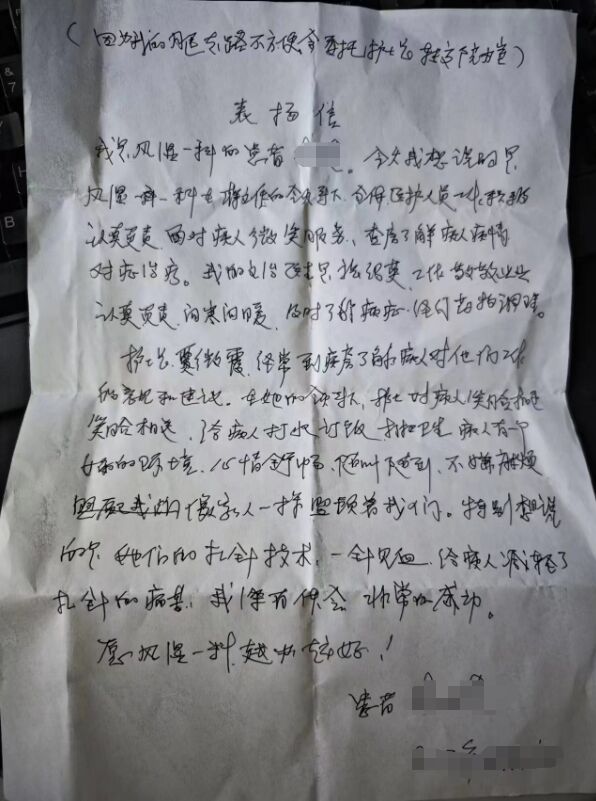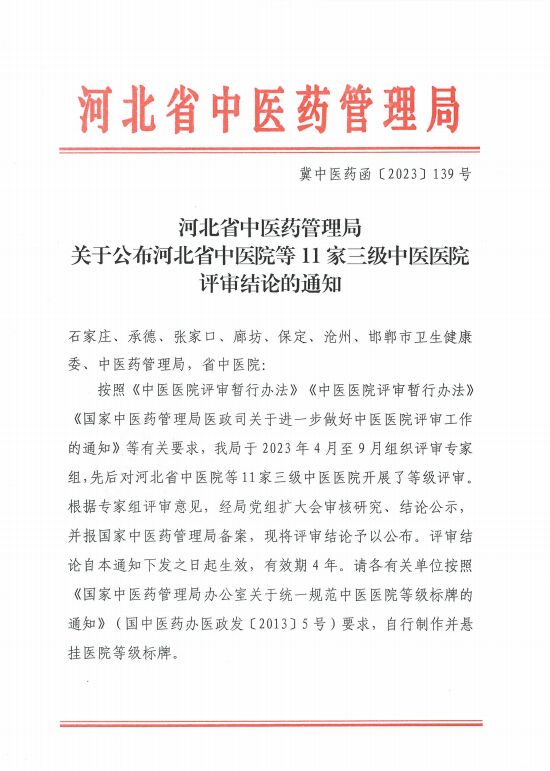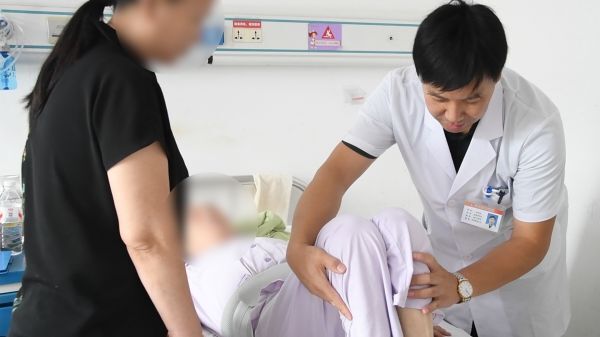
“Under the leadership of Chief Physician Jiang, all medical and nursing staff in Rheumatology Ward 1 work proactively and responsibly, serving patients with a smile, promptly understanding their conditions and providing targeted treatment, caring for patients like family members, which made our hospital stay very comfortable and left us patients deeply grateful…” Recently, Ms. Li, who was hospitalized in Rheumatology Ward 1 at Hebei Yiling Hospital, handed a handwritten letter of thanks to the ward’s Head Nurse Jia Weixia to express her heartfelt gratitude to the medical staff there.
Meticulous Care Makes Hospital Stay Feel Like Home
Ms. Li, aged 72 this year, has been diagnosed with rheumatoid arthritis for nearly twenty years. Since her diagnosis, she embarked on a long journey seeking medical treatment. In her own words, she has been admitted to almost every local hospital, but her condition showed little improvement. As a result, her treatment became intermittent. Later, Ms. Li happened to visit Hebei Yiling Hospital due to a fever, where doctors discovered her rheumatoid arthritis had worsened and advised timely treatment adjustments. Ms. Li admitted that at first she was just trying her luck by being admitted to Rheumatology Ward 1 at Hebei Yiling Hospital, but after some treatment, her rheumatoid arthritis symptoms indeed improved significantly. This greatly boosted her confidence, and she has since maintained a relationship with Rheumatology Ward 1 at Hebei Yiling Hospital for over a decade.
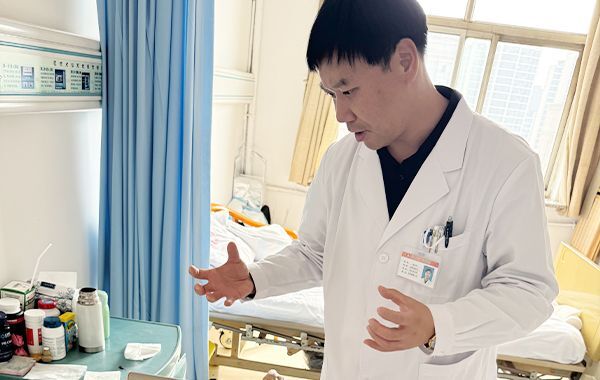
“In Rheumatology Ward 1, not only did my condition improve, but my mood also became much better,” Ms. Li said. Rheumatoid arthritis is a chronic disease with lingering symptoms, and during the long treatment process, mood can inevitably be affected. However, since being admitted to Rheumatology Ward 1 at Hebei Yiling Hospital, all the doctors and nurses have treated her kindly like family. They always maintain a smile, respond promptly when called, and answer all questions. Due to her limited mobility from the disease, the nurses proactively helped her with fetching water and meals. Considering her severe joint damage and inability to carry weight, nurses would only fill half a thermos of water each time to make it easier for her to carry. When it was time to take medication, nurses would even help pour water and bring it to her mouth. From the head nurse to ordinary nurses, they frequently visited the ward to ask if Ms. Li and other patients needed any assistance.
“I often say the nurses in Rheumatology Ward 1 are like family, but actually, they do even better than family!” Ms. Li joked that she is admitted to Hebei Yiling Hospital about twice a year and each time she jokes that she has come home again. “Moreover, the nurses’ intravenous skills are excellent. My veins are quite thin, but here, they basically get it right on the first try, greatly reducing my pain.” Ms. Li expressed with emotion that in Rheumatology Ward 1, not only is the professional skill excellent, but the service attitude is extremely kind. This has deeply touched her as a long-term patient. Her many years of personal experience have accumulated into immense gratitude, which she expressed in this letter of commendation: “I hope the high-quality service of Rheumatology Ward 1 can be seen by more patients in need, and I wish the ward continued success!”
Integrated Chinese and Western Medicine Helps Long-Term Patient Control Condition
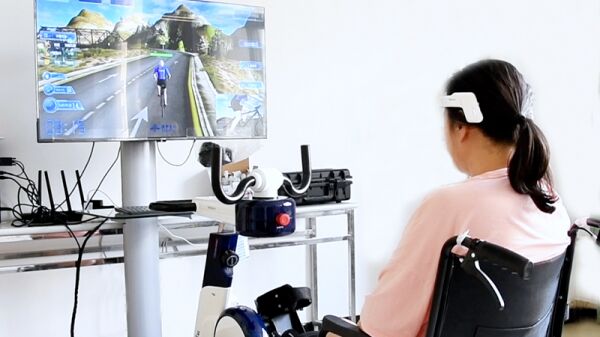
This time, Ms. Li was admitted due to worsening swelling and pain in her left knee joint. She planned to undergo a period of treatment to improve relevant indicators before having left knee replacement surgery. “When I had right knee replacement surgery before, I was first admitted to Yiling Hospital to control relevant indicators, which allowed the subsequent surgery to proceed smoothly,” Ms. Li said. At Hebei Yiling Hospital’s Rheumatology Ward 1, doctors adopted an integrated Chinese and Western medicine treatment approach for her. Compared with using only Western medicines such as steroids, her condition and related indicators improved more noticeably. “Whether it was Chief Physician Jiang or other doctors, I found they were almost fully familiar with each patient’s condition. During ward rounds, they would immediately adjust the original medications according to changes in the patient’s condition.” Ms. Li believes this timely and dynamic adjustment of treatment plans can more effectively control disease progression. After more than ten days of hospitalization this time, her right knee swelling and pain have significantly eased, and she can now walk without crutches.
Chief Physician Jiang Fubin of Rheumatology Ward 1 at Hebei Yiling Hospital stated that rheumatoid arthritis, like many rheumatic immune diseases, has a long course and often requires long-term medication control. Therefore, patients must pay attention to standardized treatment and must not arbitrarily stop, reduce, or change medications. If treatment plans need adjustment, professional doctors should make appropriate changes based on actual changes in the condition. Furthermore, rheumatic diseases such as rheumatoid arthritis can achieve clinical remission through systematic and standardized treatment, meaning clinical symptoms disappear and laboratory activity indicators return to normal. Moreover, individualized integrated Chinese and Western medicine treatment plans are more suitable for rheumatic immune diseases that tend to relapse and show significant individual differences. Chief Physician Jiang recommends that patients with rheumatic diseases adjust steroid or immunosuppressant dosages in combination with TCM syndrome differentiation and adopt early systematic comprehensive foot therapy reinforcement protocols.
In the early systematic comprehensive foot therapy reinforcement protocol, “early” refers to starting treatment during the stage when the disease has not yet caused irreversible damage and can be controlled by standardized intervention; “foot therapy course” refers to sufficient dosage and long treatment duration—patients must not stop medication on their own when symptoms improve, as this would lead to relapse, and each relapse increases treatment difficulty. Therefore, treatment must be continued according to the disease condition and constitution. “Sequential” means dynamically adjusting diagnosis and treatment plans to implement the optimal, individualized, and dynamic treatment strategy under diagnostic and therapeutic guidance principles. “Regular reinforcement” means that for different rheumatic diseases, based on disease severity, constitution, and drug response, a comprehensive clinical evaluation is conducted at different stages to decide whether to intensify treatment.
— Article excerpted from Hebei News Network, 5 September 2023