As a rare disease, scleroderma not only has low awareness but also, due to its complex pathogenesis and unknown etiology, currently lacks any “specific cure” that can completely eradicate it. Based on years of clinical diagnosis and treatment experience, the Scleroderma Diagnosis and Treatment Center of the Rheumatology Department II at Hebei Yiling Hospital has developed an effective integrated Chinese-Western medicine approach characterised by syndrome differentiation in Traditional Chinese Medicine (TCM) and combined internal and external treatments. The centre has also developed more than thirty unique in-house preparations, demonstrating significant advantages in preventing disease recurrence and improving patients’ quality of life.
Scleroderma can affect the skin and multiple internal organs.
Although Mr. Li was diagnosed with scleroderma nearly a year ago, he still finds it hard to understand how he contracted this “strange disease.” At 62 years old, Mr. Li recalls that his initial discomfort was swelling of the palms and arms, with gradual darkening and hardening of the skin. Shortly thereafter, he developed symptoms such as acid reflux and heartburn, coughing and shortness of breath, and fatigue, which severely impacted his healthy lifestyle. After consulting multiple doctors, he was ultimately diagnosed with a disease unfamiliar to him—systemic scleroderma.
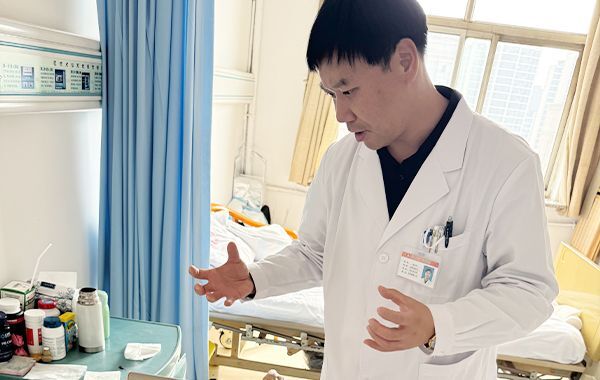
“Scleroderma is a rare disease with low clinical awareness, and because it often presents with skin symptoms, it is easily overlooked or misdiagnosed and mistreated,” said Guo Gang, Vice President of Hebei Yiling Hospital, Chief of Rheumatology Department II, and recipient of the Shijiazhuang City Famous TCM Doctor award. Scleroderma is a rare autoimmune disease affecting connective tissue. Patients often exhibit severe skin symptoms, sometimes developing a “mask-like face,” with loss of skin elasticity, stiffened facial expressions, and limited joint mobility. Scleroderma can be classified into localized and systemic forms. Systemic scleroderma not only affects the skin but is also accompanied by Raynaud’s phenomenon—where the hands turn white, blue, or purple upon cold exposure—and varying degrees of internal organ damage. For example, Mr. Li’s acid reflux and heartburn symptoms are due to gastrointestinal involvement; his cough and shortness of breath result from pulmonary interstitial fibrosis caused by scleroderma; and his fatigue is due to muscle involvement. Additionally, the disease can affect the heart, kidneys, nervous system, and other organs, with severe cases shortening patients’ lifespan. Clearly, scleroderma not only reduces quality of life and increases psychological burden but also poses a serious threat to health and life.
TCM syndrome differentiation treatment helps improve constitution and control disease progression.
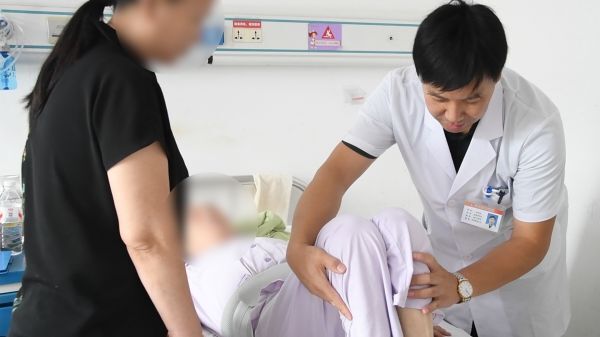
After diagnosis, Mr. Li promptly began treatment with standard protocols including corticosteroids. However, after some time, his improvement was limited. Under these circumstances, troubled by scleroderma, Mr. Li travelled a long distance from Hubei to Hebei Yiling Hospital on the recommendation of fellow patients. Upon admission, under the guidance of Professor Guo Gang, doctors in the Rheumatology Department II tailored an individualised treatment plan based on relevant examinations and Mr. Li’s specific symptoms and constitution. While maintaining his original corticosteroid dosage, they added immunosuppressants and traditional Chinese medicine. According to syndrome differentiation, the doctors identified Mr. Li’s condition as spleen and kidney yang deficiency with internal generation of phlegm-dampness. Accordingly, they formulated herbal prescriptions and applied a comprehensive treatment regimen including decoctions, in-house preparations, herbal compresses, thunder-fire moxibustion, acupuncture, fumigation and washing, and infrared therapy. After nearly a month of treatment, Mr. Li’s symptoms significantly improved: his skin colour lightened from dark to pale, arm swelling subsided, and visceral symptoms such as acid reflux, heartburn, cough, and shortness of breath largely disappeared.
Due to its complex pathogenesis and unknown cause, there is currently no “complete cure” for scleroderma, which is considered a difficult-to-treat disease. However, with ongoing research, integrated Chinese-Western medicine therapy is now recognised to achieve better treatment outcomes, effectively controlling disease progression, improving symptoms, enhancing patients’ quality of life, and prolonging survival. Professor Guo Gang, through years of clinical practice and research on scleroderma, has summarised an effective integrated treatment approach characterised by combining clinical practice with scientific research, internal and external therapies, traditional Chinese medicine with modern pharmaceutical technology, and the collateral-disease theory with cutting-edge medical technology. He adheres to integrated Chinese-Western medicine treatment for scleroderma and has established a “Cold-Heat—Collateral Disease—Zang-Fu Organ” syndrome differentiation system to guide therapy. Under this innovative framework, multiple distinctive treatment methods have been developed, such as the “Three Differentiations and Three Combinations Staging Therapy” for pulmonary fibrosis, the “Three-Stage Skin Softening Protocol” for scleroderma, thoracic duct drainage, as well as integrated Chinese-Western therapies including herbal baths, iontophoresis, herbal compress therapy, topical ointments, and moxibustion. Over thirty unique in-house preparations have been developed, effectively improving symptoms and controlling disease progression.
Professor Guo Gang emphasises that treatment of scleroderma focuses on syndrome differentiation. Even when using standard Western medication protocols, adjustments should be made based on the patient’s specific condition. For example, Mr. Li has a nearly 20-year history of diabetes, so his corticosteroid dosage was not increased; instead, appropriate immunosuppressants were added. Meanwhile, the differentiated application of internal and external TCM therapies can reduce side effects of corticosteroids and immunosuppressants, lower the risk of secondary infections, and effectively inhibit fibrosis, alleviating symptoms such as skin thickening and hardening.
Correct understanding of the disease enables early diagnosis and treatment.
Mr. Li’s condition was controlled and improved quickly, partly due to timely and effective integrated Chinese-Western medicine treatment, and partly because he was diagnosed and treated promptly with a relatively short disease course. Regarding this, Professor Guo Gang reminds that although scleroderma cannot yet be completely cured, early diagnosis and early implementation of effective treatment measures can still control disease progression and relieve symptoms, thereby improving patients’ quality of life. Therefore, patients must correctly understand that scleroderma is a chronic disease. They should not blindly trust exaggerated claims of treatment efficacy or medications, but must not give up either. Instead, they should build confidence in treatment. After stabilising the disease through systematic therapy, long-term medication maintenance is recommended, along with regular follow-ups to monitor disease changes and timely adjustment of treatment plans according to the actual condition, thus achieving relatively favourable treatment outcomes.
— Article excerpted from Hebei News Network, 2 August 2023