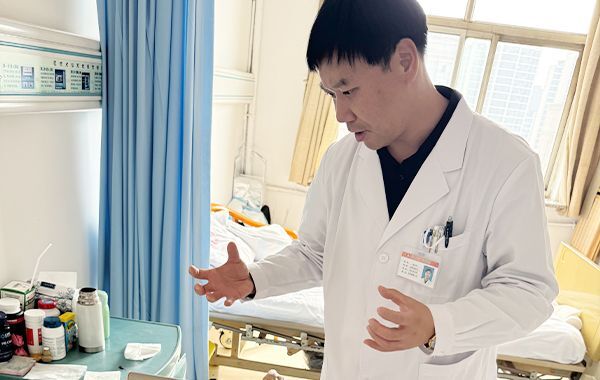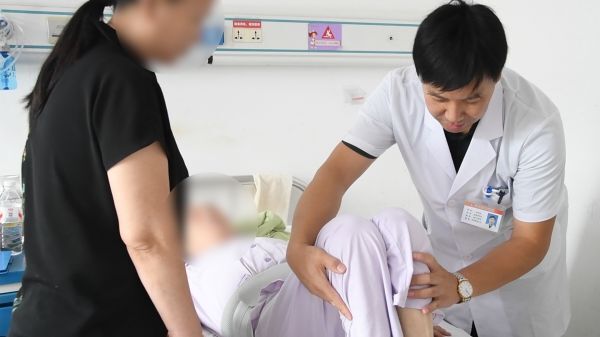
Recently, the Neurosurgery Department at Hebei Yiling Hospital successfully performed microvascular decompression surgery, assisted by neuroendoscopy, on an 82-year-old elderly patient suffering from trigeminal neuralgia. The patient recovered well postoperatively, with the pain that had troubled him for fifty years completely disappearing. Zhang Zhimin, Chief Physician of Neurosurgery at Hebei Yiling Hospital, stated that trigeminal neuralgia symptoms are stubborn, and microvascular decompression can fundamentally improve or eliminate pain by relieving vascular compression on the nerve. The use of neuroendoscopy in minimally invasive surgery further reduces surgical trauma, shortens operation time, provides a clearer surgical field, enhances treatment efficacy, and promotes faster patient recovery.
Severe unilateral facial pain should raise suspicion of trigeminal neuralgia
One week after microvascular decompression surgery and just before discharge, Mr Liu could not hold back tears of joy: “Since the surgery, my face hasn’t hurt at all. I owe it all to the excellent doctors at Yiling Hospital who performed such a wonderful operation!” Mr Liu’s emotional response was due to having suffered from trigeminal neuralgia for fifty years. Now 82 years old, he recalled that his symptoms first appeared just after he turned thirty. Initially, he thought it was toothache and did not pay much attention. However, six months later, the pain in his left cheek worsened. Mr Liu described the pain as feeling like “being cut with a knife” or “drilled with an electric drill,” unbearable in intensity. The pain occurred almost continuously, 24 hours a day. He was unable to open his mouth to eat, and even slight facial movements could trigger the pain.
“The pain described by this patient is typical of trigeminal neuralgia,” said Zhang Zhimin, Chief Physician of Neurosurgery at Hebei Yiling Hospital. Trigeminal neuralgia is a neurological disorder affecting the distribution area of the trigeminal nerve on the face and can occur at any age. It is characterised by paroxysmal severe pain, often described as electric shocks, burning, or knife-like stabbing, which patients find extremely difficult to endure. As the condition progresses, the pain intensifies, attacks become more frequent, and each episode lasts longer. Because the trigeminal nerve distribution overlaps with the oral and dental regions, many patients mistakenly believe they have toothache.
Chief Physician Zhang Zhimin reminds that toothache usually originates from swelling and pain in the gums and resolves after symptomatic treatment. In contrast, trigeminal neuralgia typically presents as sudden, stubborn pain on one side of the face. Patients experiencing severe unilateral facial pain should consider the possibility of trigeminal neuralgia and seek timely medical evaluation for an accurate diagnosis.
Surgical treatment is suitable for patients with a long course of trigeminal neuralgia
After his pain worsened and toothache was ruled out, Mr Liu was promptly diagnosed with trigeminal neuralgia and began a long journey of treatment. He tried every available treatment wherever he heard it could help, including numerous Western and traditional Chinese medicines, as well as Gamma Knife therapy. However, his condition remained unstable, and prolonged medication use led to side effects, causing him to lose hope and even temporarily abandon treatment. Two years ago, his trigeminal neuralgia worsened again, severely affecting his daily life. It was then that Mr Liu resumed seeking treatment and, on a friend’s recommendation, ultimately came to Hebei Yiling Hospital.
Based on Mr Liu’s condition, Chief Physician Zhang Zhimin recommended microvascular decompression surgery. Mr Liu felt pain relief on the day of surgery, and during the one-week postoperative hospital stay, the pain did not recur. “Many patients prefer conservative treatments, but treatment choice must be based on the actual condition. With advances in technology, minimally invasive surgeries like microvascular decompression greatly reduce surgical trauma and offer more treatment options for elderly patients,” said Zhang Zhimin. He explained that trigeminal neuralgia treatments include conservative and surgical methods. However, whether using medication, radiofrequency, or nerve blocks, pain relief is often unsatisfactory, especially in later disease stages. At this point, minimally invasive surgery can more effectively relieve pain and improve symptoms.
Neuroendoscope-assisted microvascular decompression effectively improves symptoms
The minimally invasive microvascular decompression surgery performed by Chief Physician Zhang Zhimin is currently a widely recognised, mature, and effective treatment for trigeminal neuralgia. Its efficacy relates to the disease’s pathogenesis. Causes of trigeminal neuralgia include tumour compression, nerve lesions, and vascular compression. Primary trigeminal neuralgia is mainly caused by vascular compression at the nerve root, which is why symptoms usually affect only one side of the face. Zhang Zhimin explained that microvascular decompression involves microsurgically moving and fixing the offending blood vessel away from the trigeminal nerve root, relieving compression, restoring normal nerve function, and eliminating pain. Besides trigeminal neuralgia, microvascular decompression is also used to treat hemifacial spasm and glossopharyngeal neuralgia.
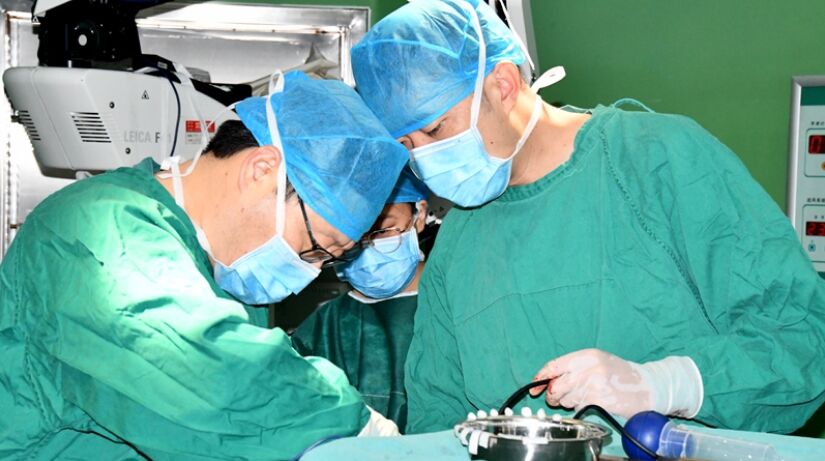
Considering Mr Liu’s condition and physical status, Chief Physician Zhang Zhimin developed a treatment plan involving neuroendoscope-assisted microvascular decompression. This surgery requires only a small incision behind the ear, offering advantages such as minimal trauma, significant effect, low recurrence, and few complications. Neuroendoscopy itself is minimally invasive, safe, cost-effective, and promotes rapid recovery. It is commonly used to treat pituitary adenomas, hydrocephalus, arachnoid cysts, cavum septum pellucidum cysts, hypertensive intracerebral haemorrhage, and deep brain tumours.
The application of neuroendoscopy in microvascular decompression not only further reduces surgical trauma, postoperative complications, and operation time, promoting faster recovery, but also provides a uniquely magnified local view. This allows a wider and clearer surgical field, enabling the surgeon to better visualise the trigeminal nerve and surrounding structures, avoid missing responsible vessels hidden in microscope blind spots, and perform more comprehensive surgery. This improves treatment outcomes, minimises recurrence, and achieves a curative effect. Hebei Yiling Hospital’s Neurosurgery Department has been among the first in Hebei Province to apply neuroendoscopy in treating trigeminal, facial, and glossopharyngeal nerve diseases, demonstrating the department’s strengths in minimally invasive treatment.
— Article excerpted from Hebei News Network, 19 August 2023