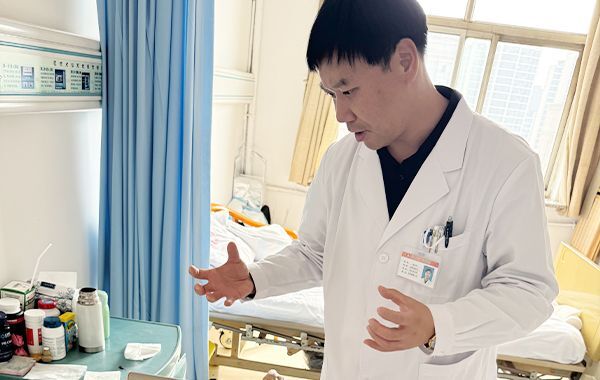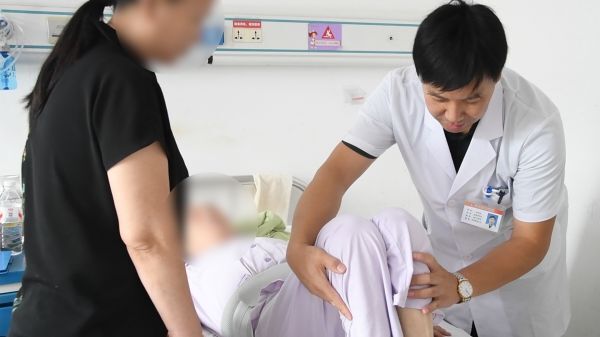
Treatments such as stent implantation can rapidly open the major coronary arteries, protecting the patient’s life and health; however, during myocardial infarction (MI), microvascular lesions may still exist that cannot be improved through interventional procedures, leading to microcirculation disorders and myocardial injury. This results in many MI patients continuing to experience symptoms such as shortness of breath, fatigue, chest tightness, and chest pain after the event. Addressing this clinical phenomenon, Professor Jia Zhenhua, a State Council Special Government Allowance Expert, Qihuang Scholar, and cardiopulmonary disease specialist at Hebei Yiling Hospital, approaches treatment from the perspective of heart-lung therapy. By syndrome differentiation and prescription formulation to tonify qi and promote collateral circulation, he helps restore the damaged myocardium, thereby alleviating symptoms and achieving more effective rehabilitation.
T-wave inversion indicating myocardial injury after myocardial infarction
Mr. Li (pseudonym) recently underwent coronary intervention due to severe three-vessel disease and acute myocardial infarction. A stent was implanted in the left anterior descending artery, which had a 95% stenosis and was the most severely affected vessel, relieving the narrowing and improving cardiac blood supply. Postoperatively, his severe chest pain was significantly relieved, but he still frequently experienced shortness of breath and general weakness, along with a loss of appetite. “My surgery was very successful, and I have been taking my routine medications for coronary heart disease, hypertension, and diabetes on time, so why do I still feel unwell?” Mr. Li sought further medical evaluation. An electrocardiogram (ECG) showed marked T-wave inversion with an amplitude of 1.2 mV (normal amplitude typically ranges from 0.1 to 0.5 mV).
It is reported that T-wave inversion on ECG often appears during the recovery phase of acute myocardial infarction and is a typical manifestation of myocardial injury. Cardiologists at Hebei Yiling Hospital explain that myocardial ischemia is the primary cause of T-wave inversion on ECG. Acute myocardial infarction is usually caused by acute thrombosis, severe vascular stenosis, or occlusion. Therefore, after an acute MI, the myocardium deprived of effective blood supply inevitably suffers damage. Additionally, Mr. Li’s delayed hospital visit further aggravated his myocardial injury. Even after stent implantation and relief of coronary artery stenosis, although cardiac blood supply improved, some damaged myocardium could not recover. Moreover, due to coronary microcirculation disorders, microvascular lesions were not effectively resolved, preventing adequate myocardial perfusion and adversely affecting the patient’s prognosis.
Lung-declaring, heart-invigorating, collateral-unblocking, and pain-relieving to improve symptoms
To effectively alleviate Mr. Li’s symptoms of shortness of breath, chest tightness, and chest pain, the cardiology department at Hebei Yiling Hospital invited Professor Jia Zhenhua, a cardiopulmonary disease expert at the hospital, for consultation. Based on Mr. Li’s specific condition, Professor Jia applied the theory of integrated heart-lung treatment and prescribed a modified version of the department’s standard Xuanfei Guaxin Formula. Guided by the collateral-disease theory, this formula includes herbs such as Huangqi (Astragalus), Danshen (Salvia miltiorrhiza), and Chuanxiong (Ligusticum chuanxiong), which tonify lung qi, promote blood circulation, and unblock collaterals. It is suitable for syndromes of heart-lung qi deficiency and blood stasis obstructing the vessels, such as post-acute MI intervention angina presenting with chest tightness, chest pain, shortness of breath, fatigue, and reduced exercise tolerance. These symptoms correspond to heart-lung deficiency and vascular obstruction patterns, for which this formula is appropriate.
“Post-stenting myocardial ischemia causing angina discomfort has always been a therapeutic challenge. In clinical practice, we have innovatively applied collateral-unblocking Chinese medicine combined with integrated heart-lung treatment to develop a relatively effective integrative Chinese-Western medicine treatment protocol,” said Professor Jia Zhenhua. The theory of integrated heart-lung treatment has long been discussed in classical Chinese medicine texts. For example, the Huangdi Neijing states, ‘Pain in the chest, lying down as if alone, pain worsens with movement, colour unchanged—this is lung-heart pain,’ which can guide treatment of myocardial infarction and angina. From a TCM perspective, the heart and lungs are closely related to the vital activities of life and the maintenance of normal function of the internal organs through the ‘great qi in the chest.’ Since ‘the lung governs qi,’ smooth qi flow is essential to promote heart blood circulation. Therefore, treating coronary heart disease and angina must also involve regulating the lungs, applying integrated heart-lung therapy to promote qi movement and blood circulation.
Integrative Chinese-Western Medicine Treatment for Cardioprotection
Under the careful syndrome differentiation and treatment by Professor Jia Zhenhua, Mr. Li experienced significant improvement in shortness of breath and fatigue after one week of medication. After one month of continued syndrome-based treatment, symptoms of shortness of breath and fatigue had basically disappeared. A follow-up ECG showed that the depth of T-wave inversion had significantly decreased, with the inversion amplitude improving from 1.2 mV to 0.3 mV, a 75% recovery in amplitude, indicating marked myocardial recovery—an outcome difficult to achieve with conventional Western medication alone. Additionally, as Mr. Li had poor appetite, Professor Jia added spleen-strengthening and dampness-eliminating herbs to the formula to aid digestion. Currently, his appetite has returned to normal and is noticeably improved.
“For chronic diseases such as cardiovascular conditions, integrative Chinese-Western medicine approaches are more conducive to long-term disease management,” said Professor Jia Zhenhua. This combined treatment method not only promptly relieves patient symptoms but also addresses the fundamental pathogenesis through holistic regulation. Moreover, by applying heart-lung theory and syndrome differentiation in medication, it more comprehensively regulates qi and blood, further facilitating symptom improvement.