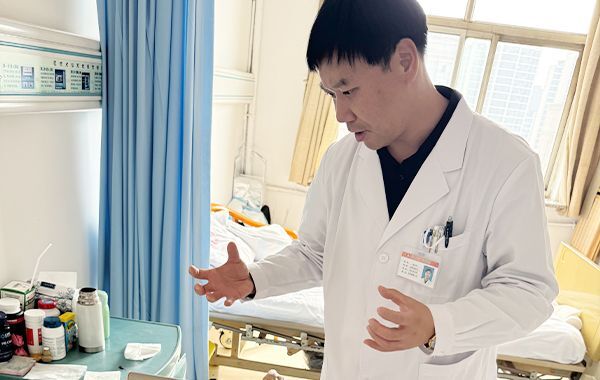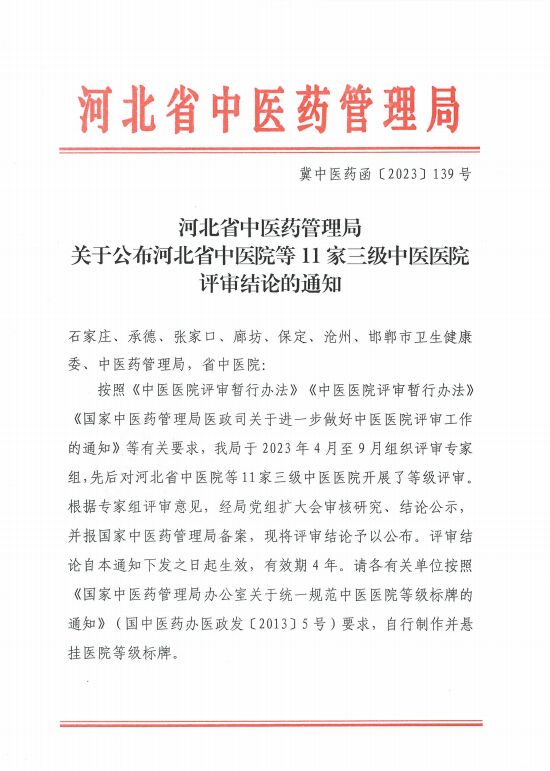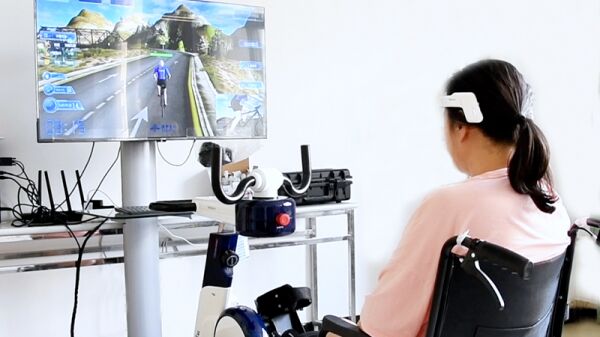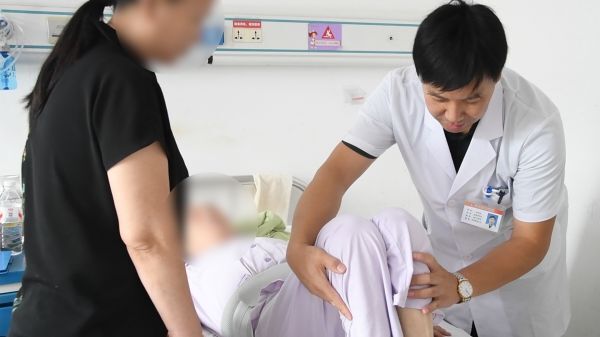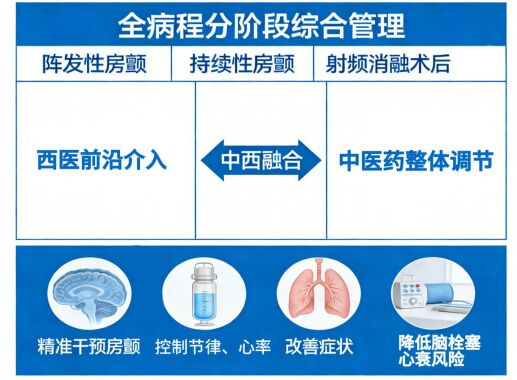
For cardiovascular diseases such as atherosclerosis, coronary heart disease, heart failure, and arrhythmias, integrated Chinese and Western medicine treatment often enhances efficacy and improves patients’ quality of life. The Cardiovascular Department of Hebei Yiling Hospital, a key clinical specialty of the National Administration of Traditional Chinese Medicine and a National Regional TCM Cardiovascular Disease Diagnosis and Treatment Centre, fully utilises the advantages of integrated Chinese-Western medical diagnosis and treatment. On one hand, it continuously advances cutting-edge medical technologies such as stent intervention, cardiac pacemakers, and radiofrequency ablation, building a sophisticated interventional treatment platform to promptly and efficiently open blood vessels, restore blood supply, or adjust cardiac rhythm for patients. On the other hand, guided by the TCM collateral-disease theory, it treats major cardiovascular diseases including coronary heart disease, chronic heart failure, and complex arrhythmias. Under the leadership of Professor Jia Zhenhua, an expert with a special government allowance from the State Council, Qihuang Scholar, and cardiopulmonary disease specialist, new treatment pathways have been developed. Using syndrome differentiation to apply collateral-opening Chinese medicines, the hospital improves myocardial microcirculation, protects the myocardium, and integrates regulation, thereby helping patients better alleviate symptoms and control their condition.
Triple-vessel disease affects blood supply; timely stent intervention recommended for improvement
According to reports, the left anterior descending artery, circumflex artery, and right coronary artery are three crucial vessels supplying blood to the heart. When all three vessels exhibit a certain degree of stenosis or occlusion simultaneously, this is known as triple-vessel disease. This condition means that the heart’s blood and oxygen supply are severely compromised, potentially causing symptoms such as chest tightness, chest pain, shortness of breath, and wheezing, and may lead to myocardial infarction or heart failure. Moreover, myocardial tissue necrosis begins 40 minutes after a heart attack occurs, and after four hours of coronary artery occlusion, most of the affected myocardium undergoes irreversible necrosis, which is extremely dangerous. Therefore, once severe coronary artery stenosis or occlusion is diagnosed, it is necessary to promptly relieve the narrowing, open the vessels, and restore blood supply to the heart.
Generally, if triple-vessel disease is severe, such as complete or near-complete occlusion, coronary artery bypass grafting (CABG) is the appropriate treatment. However, CABG requires open-chest surgery and is highly invasive. A significant number of patients cannot undergo this surgery due to factors such as age, physical condition, underlying diseases, or psychological reasons. In such cases, timely interventional treatment can effectively open the vessels and improve cardiac blood supply. Experts from the Cardiovascular Department of Hebei Yiling Hospital state that interventional treatment is relatively less invasive and can provide treatment opportunities for more cardiovascular patients. As a key specialty designated by the National Administration of Traditional Chinese Medicine, a National Regional TCM Cardiovascular Disease Diagnosis and Treatment Centre, and a National Standard Chest Pain Centre, Heart Failure Centre, and Atrial Fibrillation Centre, the hospital’s interventional team is proficient not only in routine coronary interventions but also in developing personalised interventional treatment plans based on the patient’s specific condition, using intravascular ultrasound and other assessment methods. For example, for severe triple-vessel disease, staged interventions may be performed, or a combined strategy of stents and drug-coated balloons may be employed to dilate narrowed vessels and achieve complete cardiac revascularisation, maximising improvement of heart blood supply.
TCM syndrome differentiation and collateral opening to relieve chest pain
“Before interventional treatment, during the recovery period after intervention, and even throughout the patient’s long-term rehabilitation after discharge, we generally provide TCM syndrome differentiation treatment to regulate constitution, alleviate symptoms, and improve long-term prognosis,” said Professor Jia Zhenhua. He explained that the hospital’s integrated Chinese-Western medicine approach is a diagnostic and treatment feature, especially for common cardiovascular diseases with often prolonged courses. Treatment is tailored according to the patient’s specific condition combined with TCM syndrome differentiation. For example, administering TCM treatment before stent intervention can reduce surgical risks and help improve discomfort symptoms more effectively. After the intervention, combining TCM with conventional treatment can improve cardiopulmonary function and contribute to long-term stable disease control.
Professor Jia Zhenhua stated that the greatest characteristic and advantage of TCM syndrome differentiation treatment is adjusting the herbal formula according to the patient’s symptoms and disease changes at any time, achieving the most precise symptomatic treatment. Generally, triple-vessel coronary disease causes long-term myocardial ischaemia and hypoxia, leading to angina and heart failure, consistent with the TCM feature of “chronic illness entering the collaterals.” Therefore, before interventional treatment, based on the hospital’s standard formulas, syndrome differentiation is applied to regulate collaterals, tonify qi, resolve phlegm, and eliminate turbidity, thereby relieving chest tightness and chest pain and creating favourable conditions for successful intervention. After the intervention, syndrome differentiation is again performed to adjust the formula; for example, if heart failure symptoms are prominent, treatment to tonify qi, warm yang, promote diuresis, and reduce oedema can be given to improve lower limb oedema and increase cardiac ejection fraction.
Treating from the collateral theory to address both root and branch
The organic integration of Chinese and Western medicine can achieve synergistic advantages, facilitating patient recovery. For cardiovascular diseases such as coronary heart disease, coronary intervention has become a relatively mature and effective method. The interventional team at Hebei Yiling Hospital’s Cardiovascular Department is proficient in advanced techniques such as left bundle branch area pacing and pulsed electric field ablation, as well as implantation surgeries for single-chamber/double-chamber pacemakers, implantable cardioverter defibrillators (ICD), and conduction system pacemakers. They also perform three-dimensional radiofrequency ablation for various arrhythmias and coronary stent implantation, utilising modern diagnostic and treatment technologies. These can help patients quickly open vessels, restore cardiac blood supply, and protect life and health. Meanwhile, alongside standard Western medical treatment, TCM syndrome differentiation combined with collateral-opening herbal therapy can better improve microcirculation, protect the myocardium, reduce ventricular remodelling, relieve related symptoms, significantly lower mortality and rehospitalisation rates, and enhance quality of life. The Cardiovascular Department of Hebei Yiling Hospital fully leverages the advantages of integrated Chinese-Western medicine, applying TCM collateral theory-guided syndrome differentiation and herbal treatment, achieving favourable clinical outcomes.
For cardiovascular diseases such as coronary heart disease, myocardial infarction, and heart failure, which fall within the TCM collateral disease category, the department applies collateral-opening herbal medicines according to the patient’s actual condition. These treatments protect the vascular endothelium, prevent vasospasm-induced angina, inhibit plaque formation, stabilise plaques, and prevent plaque rupture. When combined with TCM collateral-opening therapy after stent and other interventional treatments, they can also reduce the incidence of no-reflow phenomenon post-stenting, improve myocardial microcirculation and perfusion, thereby enhancing the long-term prognosis of patients with stent implantation.
For heart failure, especially chronic heart failure where Western medicine treatment effects are suboptimal, the Cardiovascular Department of Hebei Yiling Hospital analyses the pathogenesis and progression of heart failure from the perspectives of qi, blood, and fluid. Following the treatment principle of “simultaneous treatment of qi, blood, and water with differentiation and elimination,” they apply therapies to tonify qi, warm yang, activate blood and open collaterals, and promote diuresis to reduce oedema. This approach effectively improves symptoms such as palpitations, shortness of breath, orthopnoea, oliguria, and oedema, while enhancing cardiac ejection fraction. Additionally, TCM can regulate neuroendocrine function through collateral opening and blood activation, preventing excessive neuroendocrine activation and ventricular remodelling that lead to further cardiac function deterioration, thus fundamentally treating heart failure from its pathogenesis. Therefore, for cardiovascular diseases, rational application of TCM collateral-opening treatment can address both symptoms and root causes, achieving better disease control.