“Thank you to the angels in white at Yiling for giving me a new lease on life!” Recently, the author witnessed a touching scene in the rehabilitation ward of Hebei Yiling Hospital, where a patient about to be discharged and his wife tearfully bowed to the medical staff involved in his care.
It is understood that Mr. Zhang, 47 years old, is a typical work injury patient. On July 10 last year, while working on an electric pole, he was unfortunately electrocuted by a high-voltage wire, which caused him to fall from a height of 5 meters. After a dull thud, Mr. Zhang immediately lost consciousness. His coworkers rushed over upon hearing the sound, but despite calling and performing chest compressions, there was no response. He was quickly sent to a nearby county hospital. After a CT scan in the emergency department, he was diagnosed with “severe traumatic brain injury, multiple skull fractures, rib fractures, pulmonary contusion, and electric shock injury,” and underwent emergency surgeries including tracheotomy. Postoperatively, the patient remained unconscious, causing great anxiety among his family who had rushed to the hospital.
After two days of treatment, the family transferred him to the local city brain center hospital, where he was diagnosed with “severe open traumatic brain injury.” Despite one month of intravenous therapy, the patient remained unconscious. The family then transferred him again to a top-tier comprehensive hospital in the city. After three months of comprehensive rehabilitation and medication treatment in the rehabilitation department, the patient gradually regained consciousness but was slow to respond, unable to speak, with weak limb movement and fully dependent on care for daily activities. Until February this year, the patient’s symptoms slightly improved; he could slowly turn over and sit up by himself and could speak simple words, but his overall condition remained poor, still fully dependent on care. The patient still had a postoperative tracheotomy and indwelling gastric tube. The accompanying family members hoped to have the tubes removed as soon as possible after treatment here. They had been heartbroken watching their loved one with numerous tubes during treatment at the local hospital, but repeated pulmonary infections caused by the tracheotomy tube made removal difficult, so the hope for tube removal had not been realized.
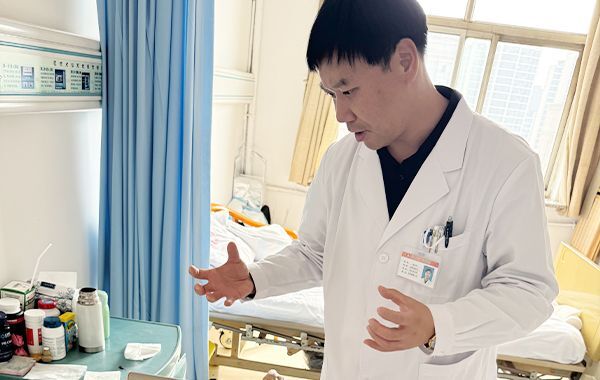
Just when they were utterly despairing, a coworker who came to visit introduced them to Hebei Yiling Hospital, where a relative of his who was paralyzed due to a work injury had received successful treatment. Since the hospital is the Hebei Province Work Injury Rehabilitation Center, the relative sought treatment there and indeed received satisfactory care. They learned that the hospital has a first-class team of work injury specialists, advanced rehabilitation facilities, distinctive treatment methods, and support from work injury insurance policies, making it especially suitable for work injury rehabilitation. With a hopeful attitude, the family transferred Mr. Zhang hundreds of miles to the rehabilitation department of Yiling Hospital. Upon admission, Director Hu Qiusheng of the rehabilitation department examined Mr. Zhang and found that the patient had poor cognition, slow responses, unclear speech, limited limb movement, could stand briefly under supervision but only for a few seconds with very poor stability, intermittent coughing with weak cough strength, sticky sputum that was difficult to expectorate, and was mostly dependent on care for daily life.
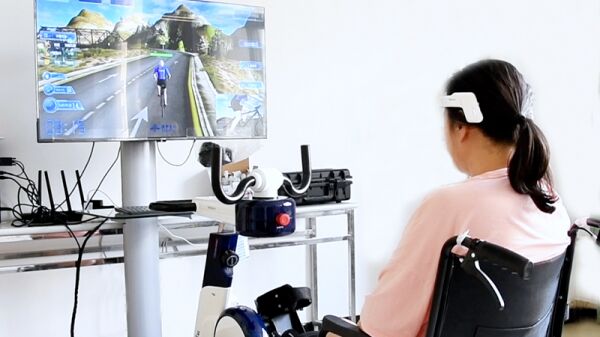
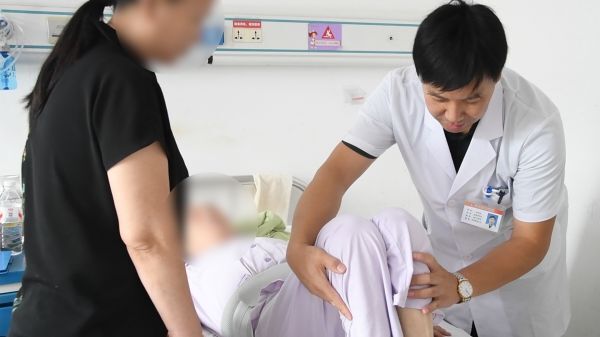
After a thorough examination and inquiry, Director Hu tailored an integrated Chinese and Western medicine treatment plan based on the patient’s specific condition: symptomatic Western medications including antiepileptics, heat-clearing and cough-relieving expectorants, and anti-infectives; combined with a series of traditional Chinese medical therapies such as acupuncture and manual techniques; alongside physiotherapy and rehabilitation training aimed at improving limb and cognitive functions. The attending physician Li Longyi precisely implemented the plan. After one month of systematic rehabilitation treatment under this protocol, the patient’s symptoms improved: coughing lessened, strength increased, he could sit steadily, and the tracheal and gastric tubes were successfully removed, allowing oral feeding and simple verbal communication. Communication became smoother, making care easier for the family and rekindling their hope. After another two months of treatment, coughing and sputum symptoms basically disappeared, there was no longer choking when drinking water, and except for needing assistance when walking, other functions returned to normal. Mr. Zhang was very happy and more confident in the treatment; the family was sincerely pleased. After five months of hospitalization, the patient’s overall condition showed significant improvement; he could stand steadily on his own and walk a few steps independently. Due to family matters, he was temporarily discharged. Although he had not fully recovered to his pre-accident state, the accompanying family felt very satisfied, as caring for him had become much easier. They considered restoring a patient paralyzed for over half a year to this state a true medical miracle.
At parting, she happily led the patient in bowing to the rehabilitation medical team to express their deep gratitude, resulting in the scene described at the beginning of this article.
According to Director Hu: “It is common for patients like this to reach such a level of recovery here. Continued treatment can further improve function, with the hope of restoring normal walking, enabling patients to live independently and even reintegrate into society. Our hospital employs a trinity rehabilitation treatment model guided by the collateral-disease theory specifically for work injury patients. This includes a comprehensive rehabilitation platform, an experienced expert team, and first-class targeted rehabilitation equipment. We have the capability and confidence to help them rebuild their lives with dignity and to reopen the door of hope for these families on the brink of collapse.”