In today’s era of rapid medical technological advancement, precision medicine is becoming a new hope for patients. Recently, Hebei Yiling Hospital achieved a medical breakthrough combining “speed and precision”—the Functional Department and Orthopaedics Department collaborated, utilizing musculoskeletal ultrasound technology to successfully perform a tendon adhesion release surgery in just 3 minutes on a patient with severe stenosing tenosynovitis. Postoperatively, the patient’s finger mobility was immediately restored. This surgery not only filled a gap in the hospital’s precise minimally invasive treatment of musculoskeletal diseases but also marked an important milestone in the hospital’s advancement towards precision medicine, signifying a major breakthrough in the clinical application of integrated ultrasound diagnostic and therapeutic technology.
Stenosing tenosynovitis, commonly known as “trigger finger” or “trigger thumb,” is a common musculoskeletal disorder. It results from repeated friction between the hand tendons and their sheaths, causing inflammation and proliferation that create a “catching” effect. This leads to symptoms such as finger pain, limited movement, triggering, and even locking, severely affecting daily activities. High-risk groups include programmers and manual laborers who overuse their hands, as well as women in the special physiological stage of menopause. The woman who underwent surgery had long-term overuse injury, experiencing unbearable pain in her left thumb, difficulty moving the interphalangeal and metacarpophalangeal joints, worsening pain with flexion and extension accompanied by obvious triggering, which greatly disrupted her daily life. She ultimately sought effective treatment at Hebei Yiling Hospital.
In the past, treatment options for tenosynovitis were limited. Oral medications could only temporarily relieve symptoms and were prone to relapse; local corticosteroid injections or needle-knife therapy often relied on the physician’s experience and were performed “blindly,” carrying risks of damaging tendons, blood vessels, and nerves; open surgery involved significant trauma, slow recovery, and potentially unsightly scars. This patient had poor results with medication, was unwilling to undergo open surgery, and was hesitant about traditional needle-knife therapy, thus came to Hebei Yiling Hospital hoping for rehabilitation.
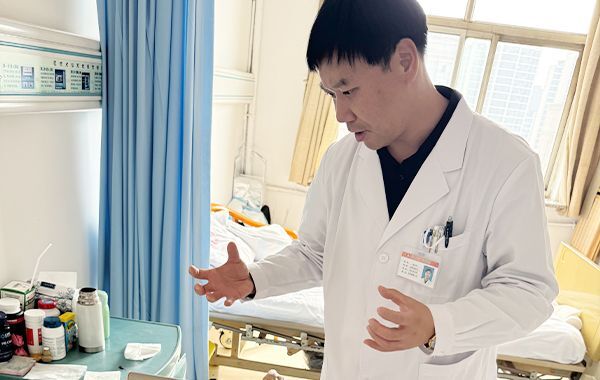
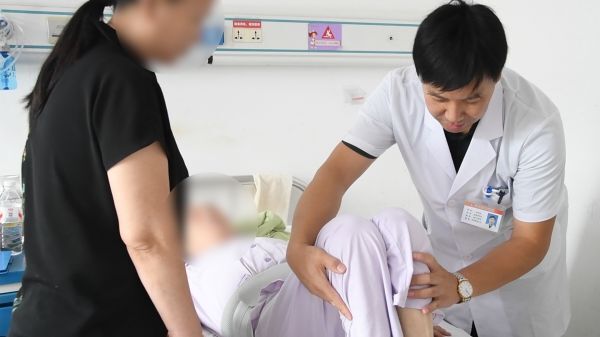
Upon admission, Chief Physician Hei Dongmei from the Functional Department thoroughly assessed the patient’s condition and decisively chose to use musculoskeletal ultrasound technology for diagnosis and treatment. Chief Hei explained that musculoskeletal ultrasound, as an emerging technology, uses a high-frequency ultrasound probe to clearly visualize superficial soft tissue structures such as muscles, tendons, ligaments, and peripheral nerves, enabling precise diagnosis of structural abnormalities caused by inflammation, tumors, injury, or deformity. Combined with the patient’s history and clinical symptoms, most cases achieve accurate ultrasound diagnosis, greatly improving clinical diagnostic accuracy. More importantly, under ultrasound guidance, musculoskeletal diseases can be treated visually, providing patients with greater reassurance. After routine ultrasound evaluation, preoperative tests only required standard ECG and coagulation time assessments. Additionally, the patient did not need hospitalization; the procedure was completed as an outpatient day surgery, all covered under medical insurance.
After localizing the lesion, Chief Hei Dongmei collaborated closely with Dr. Zhang Bin from the Orthopaedics Department Ward 1 to perform the tendon adhesion release surgery. The procedure employed ultrasound-guided needle-knife release therapy for stenosing tenosynovitis, ingeniously integrating the traditional Chinese medicine characteristic of small needle-knife therapy. Under real-time ultrasound guidance, targeted release and precise treatment were achieved. Compared to traditional blind puncture, ultrasound guidance clearly displays anatomical layers and precisely locates treatment targets, making the needle-knife release and drug injection process transparent, significantly enhancing operational safety and therapeutic efficacy while minimizing the risk of tendon injury.
During the surgery, Dr. Zhang Bin, under ultrasound guidance, precisely inserted the small needle-knife into the lesion site. The small needle-knife played a unique role by rapidly separating the adhered tendon sheath tissue and releasing scar tissue, allowing the swollen tendon to pass smoothly through the narrowed sheath. The surgery was successfully completed in just 3 minutes, and the patient’s finger joint mobility immediately returned to normal. Compared with traditional treatments, this method is more minimally invasive, convenient, and cost-effective, providing patients with an unprecedented high-quality medical experience.
Chief Physician Hei Dongmei noted that although interventional ultrasound diagnosis and treatment in the musculoskeletal field has been widely implemented nationwide, there remains significant room for promotion in this region. Hebei Yiling Hospital keenly seized this opportunity, pioneering the development of musculoskeletal ultrasound interventional technology as a key focus area, committed to filling regional technical gaps and continuously advancing the cause of precision medicine.
Looking ahead, Hebei Yiling Hospital will continue to deepen the integration of ultrasound technology with minimally invasive techniques, promoting the standardization and precision of musculoskeletal disease diagnosis and treatment. The hospital aims to provide patients with higher quality and more efficient medical services, offering minimally invasive and effective treatment options for the many patients suffering from shoulder, neck, waist, and leg pain. This will allow more patients to benefit from advanced medical technology and regain healthy lives.
— Excerpted from Hebei News Network, 22 May 2025