Within the vast field of medicine, there exists a disease like a hidden “killer” that silently invades the human body—dermatomyositis. Today, we tell the story of a dermatomyositis patient’s arduous journey of seeking treatment and remarkable recovery at the Rheumatology Department II of Hebei Yiling Hospital.
The protagonist of this story is Ms. Wang from Chifeng, Inner Mongolia, a 61-year-old woman who should have been enjoying the joys of family life. A year and a half ago, her peaceful life was disrupted when red rashes suddenly appeared on both her arms. At first, she thought it was just a common allergy and underwent several weeks of anti-allergy treatment at a local hospital. However, her condition did not improve as hoped, and the rashes stubbornly remained on her arms.
Determined to rid herself of the disease, Ms. Wang embarked on a long and difficult journey seeking medical care. She visited multiple hospitals across Inner Mongolia, following doctors’ advice with high hopes and trying various treatments, including oral medications and topical ointments. Despite taking countless medications, her condition repeatedly relapsed, fluctuating between better and worse. Hearing that Beijing had abundant medical resources and might offer a cure, she resolutely travelled there for treatment. In Beijing, after a series of thorough and complex examinations, she was finally diagnosed with anti-MDA5 antibody-positive dermatomyositis (MDA5+DM). She had hoped the diagnosis would mark a turning point, but the treatment plan provided by the doctors did not meet her expectations. After following the prescribed treatment for some time, her condition worsened rather than improved. In addition to the rashes, her body became extremely weak; even slight exertion caused breathlessness, and eventually, she had to rely on a ventilator to maintain normal breathing while at rest. Each breath was a hard-fought battle. The hope for life gradually dimmed before her eyes as her illness fluctuated unpredictably, like relentless waves crashing against her body and spirit.
Just as despair was about to engulf Ms. Wang, a glimmer of dawn quietly entered her dark world. Locally, she met a patient who had previously been treated at Hebei Yiling Hospital. This patient shared their treatment experience and told her that even patients with more severe conditions had received effective treatment there and returned to normal life. Hearing this, Ms. Wang rekindled her hope. Clinging to this last ray of hope, she arrived at the Rheumatology Department II of Hebei Yiling Hospital, still dependent on a ventilator.
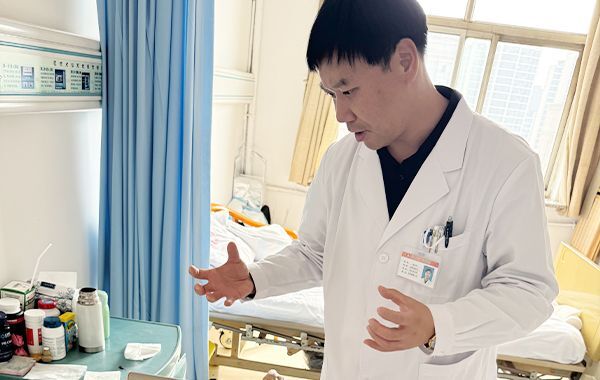
Here, Professor Guo Gang, a renowned TCM physician in Shijiazhuang, Vice President of the hospital, and Director of Rheumatology Department II, personally treated her. Professor Guo explained that anti-MDA5 antibody-positive dermatomyositis is not a simple disease. It is a special subtype of idiopathic inflammatory myopathy, like a “bomb” that could explode at any time. Patients not only develop skin papules, erythema, pigmentation changes, muscle weakness, and pain, but may also suffer varying degrees of damage to joints, lungs, heart, and other organs and tissues. As the disease rapidly progresses, symptoms such as chest tightness, shortness of breath, and palpitations appear. In severe cases, patients may experience respiratory difficulty even at rest. What is particularly alarming is that this disease is prone to rapidly progressive interstitial lung disease, with about 40% of patients dying within one year of onset. Unfortunately, many MDA5-positive dermatomyositis patients are already suffering severe lung damage by the time they see a rheumatology specialist, missing the optimal treatment window. Ms. Wang’s breathing difficulties were a dangerous sign of disease worsening.
Although Ms. Wang’s condition was severe and conventional medication had poor effects, Professor Guo and his medical team did not hesitate. They understood that for this rapidly progressing, high-mortality disease, there is currently no treatment strategy based on high-quality evidence from evidence-based medicine. Early diagnosis, accurate risk stratification, and individualized treatment are key to a good prognosis. Drawing on his rich clinical experience and superb skills, Professor Guo thoroughly analyzed her condition based on all examination results and her specific circumstances and previous medications. He devised a personalized treatment plan combining corticosteroids, immunosuppressants, traditional Chinese medicine, and TCM characteristic therapies. This was a combined Chinese-Western medicine “battle” against the disease.
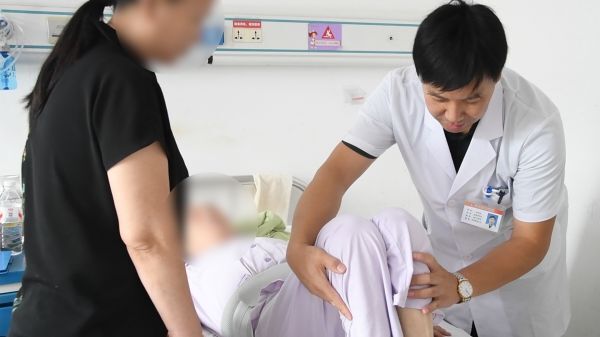
During this intense fight against the illness, the responsible physician, Dr. Lan Jie, provided strong support. Dr. Lan conducted daily ward rounds punctually and meticulously, discussing Ms. Wang’s condition changes with Professor Guo in a timely manner to adjust the medication plan. Every word she spoke was filled with professionalism and warmth, offering great comfort and encouragement to Ms. Wang and her family, helping her gradually build confidence to overcome the disease throughout the long treatment process.
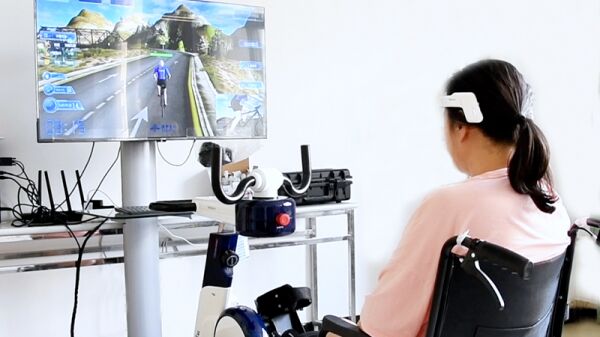
After just one week of treatment, Ms. Wang clearly felt her symptoms ease. Her legs, once as heavy as lead, seemed to regain some strength. Her previously rapid breathing became somewhat smoother. This small improvement greatly encouraged her and rekindled hope for recovery. After another half month of continuous treatment, Ms. Wang was able to walk over 100 metres. Even more excitingly, she no longer needed to rely on the ventilator—her “lifeline”—while at rest. The life once imprisoned by disease was now revitalized. Ms. Wang’s face beamed with a long-lost smile—love for life, joy in recovery, and deep gratitude to all medical staff at the Rheumatology Department II of Hebei Yiling Hospital.
Throughout Ms. Wang’s treatment, what we witnessed was not only superb medical skill but also the responsibility and dedication of the medical staff. During every ward round, doctors carefully inquired about her condition, leaving no detail overlooked. Nurses provided gentle, patient, and meticulous care. They were like beacons in the darkness, illuminating Ms. Wang’s path forward and giving her the courage and strength to fight the disease.
Ms. Wang’s recovery case is a microcosm of the Rheumatology Department II at Hebei Yiling Hospital. Here, countless patients tormented by disease have regained hope for life. When facing rapidly progressing and difficult-to-treat diseases such as anti-MDA5 antibody-positive dermatomyositis, the medical team at Hebei Yiling Hospital’s Rheumatology Department II relies on profound medical expertise and rich clinical experience, continuously improving the quality of medical services and exploring treatments for complex diseases. With professional skills and warm care, they build strong health defenses for their patients.
— Excerpted from Hebei News Network, 12 March 2025