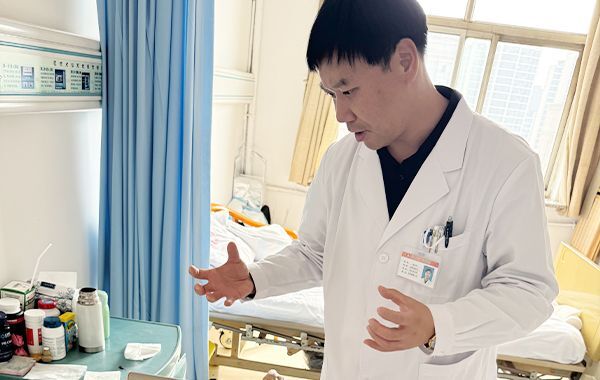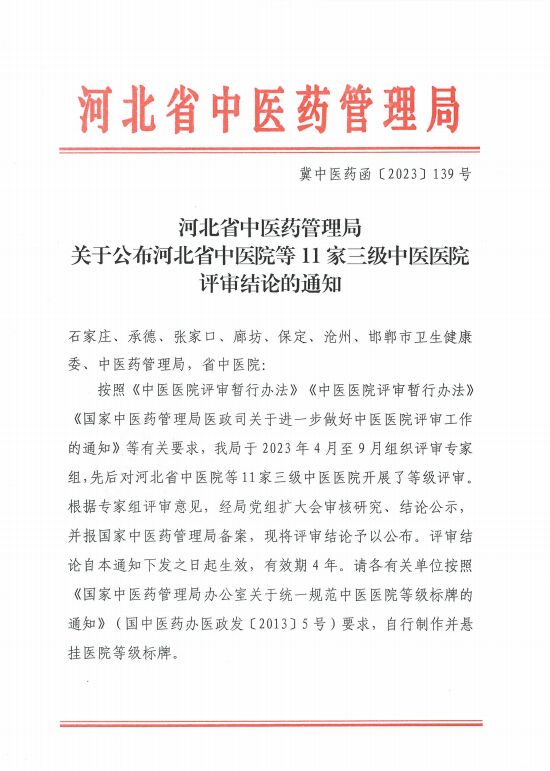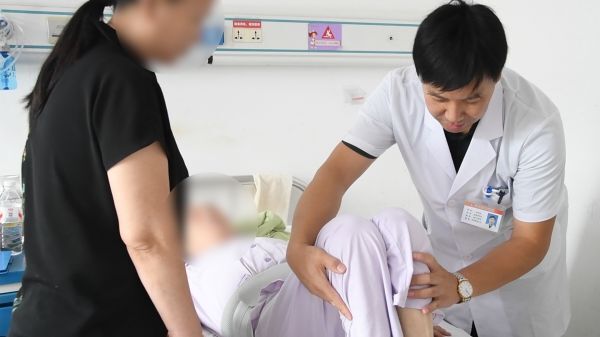
To vigorously promote the spirit of model workers, the spirit of labour, and the spirit of craftsmanship, and to fully leverage the role of model workers, skilled craftsmen, and other high-level talents as the main force in urban development, the Shijiazhuang Federation of Trade Unions, Science and Technology Bureau, Education Bureau, and Health Commission jointly launched the establishment and inclusion process for the Class-A Model Worker and Craftsman Talent (Famous Teachers, Famous Physicians) Innovation Studio Database in Shijiazhuang. On December 23, the list was announced, and the Gao Huailin Master Physician Innovation Studio of Hebei Yiling Hospital was successfully selected.
Since its establishment in 2021, under the leadership of Professor Gao Huailin, head of the studio, the Gao Huailin Master Physician Innovation Studio has been diligent in basic research and clinical diagnosis and treatment. It has undertaken multiple related research projects, including key R&D plans from the Hebei Provincial Science and Technology Department and projects from the Hebei Provincial Administration of Traditional Chinese Medicine. Promoting clinical practice through scientific research, the studio leverages the advantages of collateral therapy. Guided by the traditional Chinese medicine collateral-disease theory, it has innovated academic perspectives on spleen-based collateral therapy to treat diabetes and diabetic foot vascular complications. This approach has reduced amputation, disability, and mortality rates among diabetic foot patients, improved patients’ quality of life, lowered treatment-related complication costs, greatly alleviated patient suffering, and reduced the burden on families and society, thus opening new avenues for diabetes prevention and treatment. Currently, the studio has one doctoral supervisor, two master’s supervisors, and three TCM standardized training instructors. It has trained 14 master’s and doctoral students, organised seven national and provincial continuing education programmes, participated in drafting 12 national TCM diagnosis and treatment guidelines or expert consensus documents, and received multiple provincial first-class scientific awards.
Collateral Therapy for Diabetic Foot: Opening New Paths for Prevention and Treatment
As the leader of the Gao Huailin Master Physician Innovation Studio, Professor Gao Huailin currently serves as Executive Vice President of Hebei Yiling Hospital and Director of the National Key TCM Endocrinology Specialty. He is Vice Chairman of the Diabetes Committee of the Chinese Association of Traditional Chinese Medicine, Chairman of the Endocrinology Committee of the Hebei Association of Integrated Chinese and Western Medicine, Head of the Diabetic Foot Study Group of the Diabetes Committee of the World Federation of Chinese Medicine Societies, Director of the Hebei Provincial TCM Diabetes Treatment Centre, and Director of the Hebei Provincial Key Research Laboratory for TCM Prevention and Treatment of Diabetic Foot. He has been honoured as a Famous TCM Physician of Shijiazhuang, a mentor in the Shijiazhuang Famous TCM Physician Apprenticeship Programme, and a high-level talent of Shijiazhuang. Over more than 30 years of clinical work, Professor Gao has specialised in the treatment and research of endocrine diseases—especially diabetes and diabetic foot complications—and has accumulated extensive diagnostic and therapeutic experience.
Building on Academician Wu Yiling’s concept of “vascular-collateral system diseases,” Professor Gao further applied this to the syndrome differentiation and treatment of diabetic foot. Collateral therapy for diabetic foot has significantly improved clinical efficacy, reduced amputation and mortality rates, and earned high patient praise, placing it at the forefront nationally and thus opening new avenues for diabetes prevention and treatment. According to TCM collateral-disease theory, the collaterals branch horizontally from the main meridians, subdividing progressively to form a network throughout the body that connects the internal organs and tissues. This network is highly correlated with small and medium blood vessels, microvessels, and especially microcirculation. Diabetic foot often results from lower limb vascular occlusion, which occurs extensively in large, medium, and small vessels. Therefore, restoring blood flow requires not only opening and dilating large vessels but also restoring perfusion in small and medium vessels. Under this framework, guided by TCM collateral-disease theory, applying collateral-opening Chinese medicines to treat diabetic foot can effectively clear small and microvessels, restore blood and oxygen supply to the lower limbs, and promote healing of diabetic foot ulcers.
Treating from the Spleen Perspective: Regulating Endocrine Stability and Blood Sugar Control
Although diabetes is a common disease, achieving long-term stable blood sugar control and preventing diabetic complications is not easy. Under Professor Gao Huailin’s leadership, the Master Physician Innovation Studio has actively explored treatment guided by collateral-disease theory. While emphasising the damage caused by hyperglycaemia to microvessels and focusing on microvascular lesions and collateral therapy for diabetes and its complications, they have also proposed a new academic perspective of treating diabetes from the spleen, based on the qi-collateral theory to regulate the endocrine system, which has achieved excellent clinical results.
In traditional Chinese medicine, the spleen concept includes both the anatomical spleen and pancreas recognised in modern medicine. The spleen’s transport and transformation functions in TCM are closely related to the pancreas’s secretory functions in modern medicine, including glucose metabolism. Based on this theoretical foundation, Professor Gao and his team focus on the spleen to explore the pathological changes of diabetes (known as ‘Xiaoke disease’ in TCM), adopting spleen-strengthening and fluid-promoting as the main treatment principles. By strengthening the spleen, they restore the normal transport and transformation of water, grains, and body fluids, achieving both symptomatic and root-cause treatment. Clinical application has shown significant improvement in diabetic symptoms. Based on this theory, the studio developed Jinlida Granules and the in-house preparation Canqi Jinli Pills, which combined with conventional treatment, effectively improve therapeutic outcomes.
The inclusion of the Gao Huailin Master Physician Innovation Studio of Hebei Yiling Hospital in the Class-A Model Worker and Craftsman Innovation Studio Database recognises and encourages the Endocrinology Department team’s years of dedicated innovation and active exploration under Professor Gao’s leadership. Currently, Hebei Yiling Hospital’s Endocrinology Department is a key specialty designated by the National Administration of Traditional Chinese Medicine, the Hebei Provincial TCM Diabetes Treatment Centre, the Hebei Provincial Key Research Laboratory for TCM Collateral-Disease Theory-Guided Prevention and Treatment of Diabetic Foot, and the leading unit of the Diabetic Foot Study Group of the Diabetes Committee of the World Federation of Chinese Medicine Societies. Under the brand leadership of the Master Physician Innovation Studio, the Endocrinology Department will continue to leverage the advantages of TCM collateral-disease theory guidance, persistently innovate and overcome challenges, enhance technical capabilities and service quality, and provide diabetes patients with higher-quality and more efficient medical care.
— Excerpted from Hebei News Network, 2 January 2025