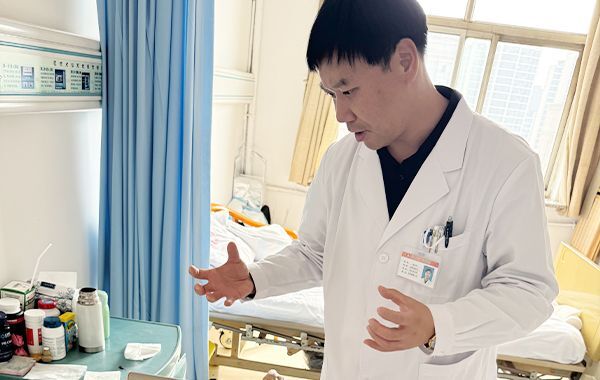
The summer park scenery is pleasant, with bright and intense sunshine, causing one to sweat after walking for a short while. Yet, despite this, Mr. Zhang pushed away the sunshade his family had held up for him. Although Mr. Zhang, who has been using a ventilator due to the progression of amyotrophic lateral sclerosis (ALS), cannot speak, his family immediately understood what he wanted to express: “He hasn’t been outside for many years. Today, he can finally visit the park. He wants to enjoy the sunshine and appreciate the scenery!” Li Jianjun, Chief Physician of the Atrophy Department at Hebei Yiling Hospital, stated that ALS and other motor neuron diseases are progressive and challenging illnesses. Although there is currently no cure, sequential supportive care at different disease stages—such as tracheostomy and ventilator-assisted breathing and feeding—can significantly benefit patients, improve their quality of life, and support their return to family and society. Moreover, reintegration into family and social life helps boost patients’ confidence in treatment and enhances therapeutic outcomes.
Timely Use of Ventilators to Assist Breathing for ALS Patients
ALS, also known as amyotrophic lateral sclerosis or motor neuron disease, is the most common type within motor neuron diseases. It is a rare and difficult-to-treat condition. As the disease progresses, patients experience muscle weakness, muscle atrophy, swallowing difficulties, and respiratory problems, eventually facing life-threatening situations. Mr. Zhang, in his fifties, has suffered from ALS for many years. As his condition worsened, his respiratory function declined severely, with extremely low blood oxygen levels, making it almost impossible for him to lie flat. A sudden severe infection further aggravated his respiratory distress. His family promptly brought him to the Atrophy Department at Hebei Yiling Hospital. However, they hesitated when doctors recommended a tracheostomy, as they previously believed that tracheostomy required prolonged ICU stays, was costly, and resulted in poor quality of life for the patient.
In response, Li Jianjun, Chief Physician of the Atrophy Department at Hebei Yiling Hospital, explained that although tracheostomy is an invasive treatment often requiring long-term ventilator dependence, which can impose physical and psychological burdens on patients and families, it is a crucial and necessary intervention for ALS patients based on disease progression. Maintaining breathing is essential for survival. Unlike other systemic diseases causing respiratory difficulty, ALS patients remain fully conscious despite respiratory muscle involvement. Therefore, timely tracheostomy and ventilator-assisted breathing effectively prolong life and improve quality of life for ALS patients. The Atrophy Department at Hebei Yiling Hospital has continuously worked to transfer tracheostomy patients from ICU to general wards as early as possible and further train family members, enabling patients to reintegrate into society and family life. This approach significantly extends patients’ lives while keeping costs low and manageable for families.
Sequential Support and Adherence to Scientific Treatment Principles
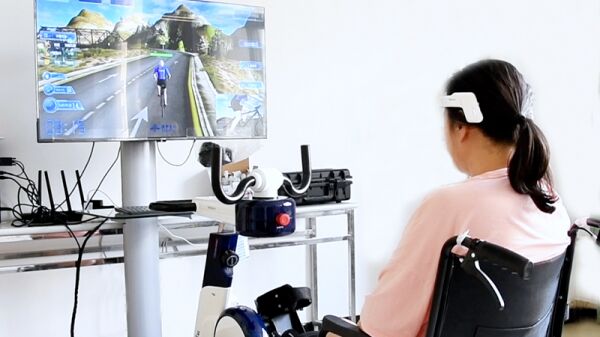
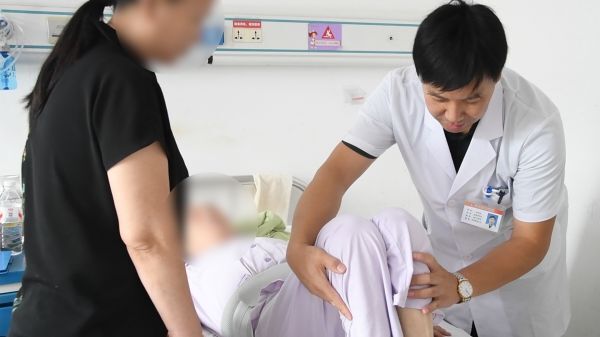
After understanding the importance of tracheostomy, Mr. Zhang’s family finally agreed to the doctors’ treatment plan. Following infection control with medication, tracheostomy, and ventilator-assisted comprehensive treatment, Mr. Zhang’s respiratory distress improved. The infection caused by multidrug-resistant bacteria was controlled, and his body temperature returned to normal. Once stable, Mr. Zhang was transferred from ICU to a general ward for further targeted treatment, such as gastrostomy to address nutritional issues caused by swallowing difficulties. Guided by the collateral-disease theory, treatment principles of “supporting the root to counter atrophy, nourishing to generate muscle, and benefiting qi to unblock collaterals” were applied. Traditional Chinese medicine methods were used based on syndrome differentiation, combined with acupuncture, acupoint injections, anal canal therapy, sacral canal drip infusion, wax therapy, music therapy, and topical ointments for comprehensive management.
Chief Physician Li Jianjun stated that the Atrophy Department at Hebei Yiling Hospital consistently adheres to a scientific treatment philosophy, conducting standardized and orderly treatment and rehabilitation nursing training based on scientific assessment. Different treatment plans and medications are applied at various disease stages, with timely adjustments to diet, rehabilitation, respiratory support, and related nursing measures according to the principle of sequential support to truly benefit patients. Alongside scientific treatment, doctors also help patients and their families establish a correct understanding of the disease, adopt a comprehensive and long-term perspective, and recognize that early diagnosis and treatment, choosing standardized therapy and proper nursing rehabilitation, and maintaining these long-term can improve quality of life and delay disease progression to some extent. This helps patients build confidence in treatment and face the disease positively.
Boosting Treatment Confidence and Returning to Life with Hope
With treatment progress, Mr. Zhang’s diet, physical strength, and mental state improved. With family assistance, he was able to get out of bed and walk briefly. Moreover, as his respiratory function improved, he could intermittently wean off the ventilator. This improvement meant Mr. Zhang could soon be discharged. Before discharge, the Atrophy Department at Hebei Yiling Hospital carefully prepared and took Mr. Zhang for a stroll in a nearby small park using a wheelchair. Since falling ill, Mr. Zhang had almost only traveled between home and hospital. Now, being able to leisurely visit the park again, his joy was evident.
To extend the lifespan of ALS patients, improve their quality of life, and reduce family financial burdens, the Atrophy Department at Hebei Yiling Hospital has repeatedly explored clinical practices. In 2022, they launched the “Let Love Return Home” initiative, which, guided by the principle of sequential support, provides medical, rehabilitation, and nursing care to help ALS patients transition from ICU to general wards and then back home for family care. “Returning to a familiar living environment is more conducive to stabilizing ALS patients’ conditions and alleviating family burdens,” said Chief Physician Li Jianjun. ALS progresses rapidly, and many patients experience significant psychological stress. However, with family companionship and increasing treatment options, the hope for improvement in ALS patients is growing. Therefore, ALS patients must build confidence and persist with active treatment.
— Excerpted from Hebei News Network, 26 July 2024