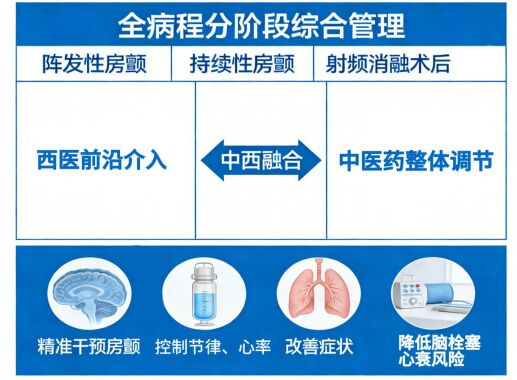
For cardiovascular diseases such as arteriosclerosis, coronary heart disease, heart failure, and arrhythmia, an integrated approach combining Chinese and Western medicine often enhances treatment efficacy and improves patients’ quality of life. On one hand, minimally invasive procedures like stent implantation, cardiac pacemakers, and radiofrequency ablation have matured and proven effective, enabling timely reopening of blood vessels, restoring blood supply, or adjusting heart rhythm. On the other hand, Traditional Chinese Medicine (TCM) offers syndrome differentiation and tailored prescriptions based on individual patients’ conditions and constitutions, addressing both symptoms and root causes. The Cardiovascular Department of Hebei Yiling Hospital, a National Key Clinical Specialty for TCM and a National Regional TCM Cardiovascular Disease Diagnosis and Treatment Centre, fully utilises the advantages of integrated Chinese-Western treatment. Guided by the TCM collateral-disease theory, it pioneers new therapeutic approaches for major cardiovascular diseases such as coronary heart disease, chronic heart failure, and complex arrhythmias, applying syndrome-differentiated collateral-opening herbal medicines to protect microvessels and myocardium, improve microcirculation, and achieve integrated regulation, thereby effectively alleviating symptoms and controlling disease progression.
Stent Intervention: Timely Reopening of Blood Vessels to Improve Blood Supply
Only after receiving the coronary angiography report did Mr. Hao suddenly realise, “No wonder I have been experiencing persistent chest tightness and discomfort — all three major coronary arteries are blocked!” The 61-year-old Mr. Hao developed symptoms including chest tightness, shortness of breath, and bilateral leg oedema about a month ago. He was diagnosed with coronary heart disease and heart failure upon seeking medical care. Mr. Hao found it hard to believe since, despite having chronic conditions such as diabetes and hypertension, he had never experienced heart discomfort before. To clarify his diagnosis and receive treatment, he came to Hebei Yiling Hospital and underwent coronary angiography in the hospital’s Cardiovascular Department, Ward 3. The examination revealed varying degrees of stenosis and occlusion in the left anterior descending artery, circumflex artery, and right coronary artery, with the most severe stenosis of 99% in the mid-segment of the left anterior descending artery, approaching near-total occlusion.
The left anterior descending artery, circumflex artery, and right coronary artery are the three major vessels supplying blood to the heart. When all three vessels exhibit stenosis or occlusion, this is termed triple-vessel disease, indicating severely impaired blood flow. Consequently, the heart cannot receive adequate blood and oxygen supply, potentially causing symptoms such as chest tightness, chest pain, shortness of breath, and dyspnoea, and may lead to myocardial infarction or heart failure. Moreover, myocardial tissue necrosis begins within 40 minutes after myocardial infarction onset, and after 4 hours of coronary occlusion, most affected myocardium undergoes irreversible necrosis, posing a serious risk. Therefore, once severe coronary stenosis or occlusion is diagnosed, timely relief of stenosis and restoration of blood flow to the heart are essential.
Based on Mr. Hao’s condition, doctors initially considered coronary artery bypass grafting (CABG) as the most appropriate treatment. However, since CABG requires open-chest surgery with significant trauma, Mr. Hao and his family preferred a less invasive, minimally invasive interventional approach. Taking into account his symptoms, electrocardiogram, angiography, and intravascular ultrasound findings, the interventional team in Ward 3 of the Cardiovascular Department at Hebei Yiling Hospital devised a staged interventional treatment plan. Combining stent implantation with drug-coated balloon angioplasty, this strategy dilated the stenotic vessels and achieved complete myocardial revascularisation, maximising improvement of cardiac blood supply.
Syndrome Differentiation and Treatment: Collateral-Opening and Qi-Boosting Chinese Medicine to Relieve Symptoms
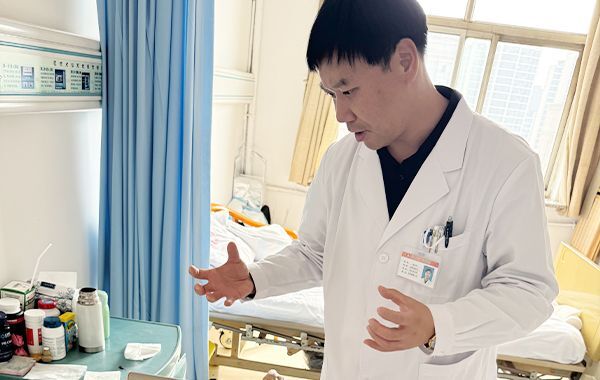
Due to the severe vascular stenosis, the interventional procedure carried certain risks. To reduce surgical risk and better alleviate symptoms such as chest tightness and pain, Mr. Hao began TCM treatment prior to stent intervention. Professor Jia Zhenhua, hospital director and cardiovascular expert at Hebei Yiling Hospital, consulted on Mr. Hao’s case and concluded that chronic myocardial ischaemia and hypoxia caused by coronary artery disease had led to angina and heart failure, progressing to ischaemic cardiomyopathy. Based on the standard formula for ischaemic cardiomyopathy and adjusted according to Mr. Hao’s specific condition, treatment focused on collateral opening, qi replenishment, phlegm elimination, and turbidity discharge, which significantly improved his chest tightness and created favourable conditions for the interventional procedure.
The greatest feature and advantage of TCM syndrome differentiation treatment is its dynamic adjustment of prescriptions according to changes in patients’ conditions and symptoms, achieving the most precise and targeted therapy. After the interventional procedure, Professor Jia further adjusted Mr. Hao’s herbal formula to address his heart failure and left ventricular enlargement, applying qi-boosting, yang-warming, diuretic, oedema-reducing, yin-nourishing, and fluid-generating therapies. After more than half a month of inpatient treatment, Mr. Hao’s symptoms of chest tightness, chest pain, and lower limb oedema disappeared. Cardiac function tests showed improved left ventricular ejection fraction and normalization of the previously enlarged left ventricle. More than a month after discharge, follow-up confirmed that Mr. Hao has remained symptom-free.
Addressing Both Symptoms and Root Causes: TCM Both ‘Unblocks the Heart’ and ‘Protects the Heart’
“For cardiovascular diseases, alongside standard Western medical treatment, rational integration of TCM collateral-opening therapy based on syndrome differentiation can better improve microcirculation, protect myocardium, reduce ventricular remodelling, and relieve related symptoms, thereby significantly lowering mortality and rehospitalisation rates and markedly improving patients’ quality of life,” said Professor Jia Zhenhua. The occurrence of coronary heart disease, myocardial infarction, and heart failure is mainly due to vascular lesions such as plaque formation and coronary arteriosclerosis, which TCM classifies as collateral disease. The TCM concept of ‘collaterals’ includes blood vessels recognised by Western medicine, especially microvessels. Guided by the TCM collateral-disease theory and based on patients’ actual conditions, collateral-opening herbs can protect vascular endothelium, prevent vasospasm-induced angina, inhibit plaque formation, stabilise plaques, and prevent plaque rupture. When combined with interventional treatments such as stenting, TCM collateral therapy can also reduce the incidence of no-reflow phenomenon post-stenting, improve myocardial microcirculation and perfusion, thereby enhancing long-term prognosis for patients with stents.
Furthermore, chronic heart failure remains incurable and Western drug treatments often yield suboptimal results. Under the guidance of TCM collateral-disease theory, herbal medicine can grasp the pathogenesis and progression of heart failure from the perspectives of qi, blood, and fluid, adhering to the principle of simultaneous treatment of qi, blood, and water with differentiation and elimination. Treatment aims to boost qi and warm yang, activate blood and open collaterals, promote diuresis and reduce oedema, effectively improving symptoms such as palpitations, shortness of breath, orthopnoea, oliguria, and oedema, while enhancing cardiac ejection fraction. Additionally, TCM can regulate neuroendocrine function through collateral opening and blood activation, preventing excessive neuroendocrine activation and ventricular remodelling that lead to further cardiac function deterioration, thus addressing heart failure fundamentally from its pathogenesis. Therefore, rational application of TCM collateral therapy in cardiovascular diseases can treat both symptoms and root causes, achieving better disease control.
Further Reading: Protect Your Blood Vessels to Prevent Heart Failure from Developing ‘Silently’
Chronic heart failure is a clinical syndrome appearing at the end stage of various cardiovascular diseases. Factors such as colds, fatigue, emotional agitation, hypertension, and coronary heart disease can trigger heart failure, with vascular factors being particularly important. Many people develop vascular lesions such as arteriosclerosis and coronary artery stenosis or occlusion unknowingly due to unhealthy lifestyles. Over time, insufficient cardiac blood supply causes ischaemic symptoms like chest tightness and dyspnoea. Without timely treatment, ischaemic cardiomyopathy may develop, leading to angina, myocardial infarction, cardiac enlargement, and eventually heart failure.
Heart failure is a gradual process that can be classified into left heart failure, right heart failure, and whole heart failure. Isolated left heart failure manifests as dyspnoea, orthopnoea, cough with sputum, fatigue, dizziness, and palpitations; isolated right heart failure mainly presents with lower limb or systemic oedema. Some patients with mild symptoms mistakenly believe rest alone suffices and neglect treatment, which is a serious misconception. Although symptoms may be subtle, heart failure poses a significant health threat. As the condition worsens, symptoms like dyspnoea and oedema intensify, impairing daily functioning and increasing the risk of sudden death. Therefore, doctors urge cardiovascular patients to prioritise heart failure prevention and management by adopting healthy lifestyles—light diet, moderate exercise, balanced work and rest, and controlling blood pressure, blood sugar, and lipids to protect vascular health. Those diagnosed with heart failure should undergo regular check-ups, monitor relevant indicators, adhere to prescribed treatments, and avoid infections such as colds.
— Article excerpted from Hebei News Network, 7 March 2024