“Doctor, I’ve been feeling palpitations for several months, but why does my heartbeat appear normal whenever I get checked at the hospital?” Mr. Zhang (pseudonym), a 50-year-old from Chengdu, had been troubled by sudden heart palpitations for a full six months. Since September last year, he frequently experienced episodes of heart pounding, sudden chest tightness, and irregular heartbeat without warning, but these symptoms would abruptly ease within minutes, returning to normal.
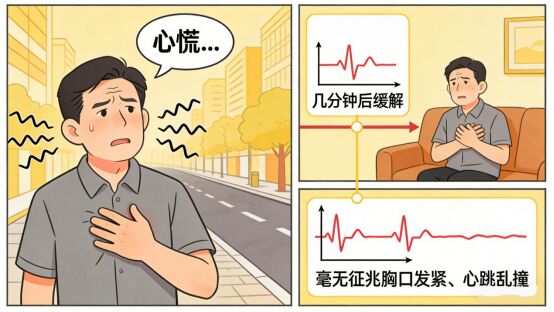
To identify the cause, he visited multiple top-tier cardiovascular hospitals across China, where doctors strongly suspected paroxysmal atrial fibrillation (AF). However, this condition’s sudden onset and cessation, with no predictable pattern, was like playing hide-and-seek with the doctors. Despite five or six hospital visits, ambulatory ECG monitoring never captured any abnormal signals.
Local doctors could only advise him to return for diagnosis during an episode and then reassess medication or ablation options based on rhythm issues. This left Mr. Zhang in endless distress, fearing progression to serious heart problems. Ultimately, he travelled thousands of kilometres to seek treatment at the Atrial Fibrillation Centre of Hebei Yiling Hospital, renowned for its expertise.
Trust across thousands of miles: seeking a comprehensive management plan addressing both symptoms and root causes
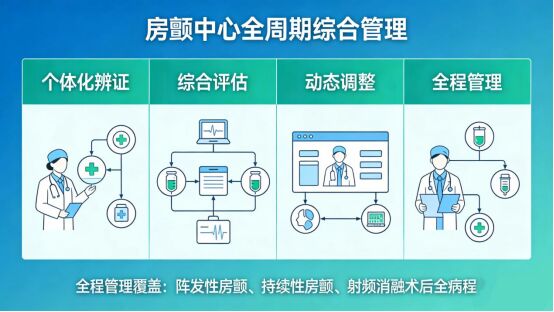
Mr. Zhang’s decision to travel so far was driven by the hospital’s comprehensive AF management system covering the entire disease course — providing patients with personalised syndrome differentiation, integrated assessment, and dynamic adjustment throughout the treatment cycle. Moreover, the combined Chinese and Western medicine expert team conducts joint consultations to formulate plans and collaboratively follow up on patient progress, which finally gave him peace of mind.
Upon admission, the integrated Chinese and Western medicine expert team completed a thorough examination for Mr. Zhang and confirmed the diagnosis of paroxysmal AF based on his symptoms, promptly initiating a multidisciplinary consultation. Professor Zhao Mingzhong, Vice President and Director of the Cardiovascular Department, explained that paroxysmal AF represents an early disease stage, where atrial structural enlargement is minimal and electrical remodelling remains reversible, marking the golden window for intervention. The core treatment goals at this stage are to alleviate symptoms, reduce AF episodes, and maintain sinus rhythm.
The department consistently advocates for early rhythm intervention centred on catheter ablation, combined with traditional Chinese medicine (TCM) to achieve integrated regulation from the root cause. Ultimately, the team tailored a combined Chinese-Western medicine treatment plan for Mr. Zhang featuring precise radiofrequency ablation plus TCM integrative modulation.
Chinese-Western medicine collaboration: restoring sinus rhythm with ablation, sustaining long-term effects with herbal medicine
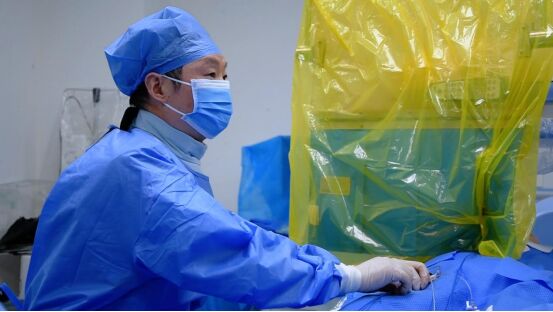
After thorough communication and confirmation that he met surgical indications, Professor Zhao Mingzhong led the cardiac electrophysiology team at the Interventional Cardiology Centre to perform radiofrequency ablation on Mr. Zhang. Through precise minimally invasive physical intervention, they successfully restored his chaotic heart rhythm to normal sinus rhythm.
Professor Zhao pointed out that radiofrequency ablation is currently the first-line interventional treatment for AF. However, clinical statistics show a 1 to 3-month ‘blanking period’ post-procedure, during which local surgical inflammation, atrial oedema, and poor atrial substrate contribute to a high risk of AF recurrence. Managing this high-risk period smoothly remains a recognized challenge in the field.
Hebei Yiling Hospital’s AF Centre leverages the unique advantages of integrated Chinese-Western medicine to address this pathological mechanism by deeply exploring the fundamental pathogenesis of paroxysmal AF and developing an innovative in-house preparation — Tongbu Fangzhen Granules. This formulation is applicable throughout the AF disease course and effectively improves clinical symptoms while reducing recurrence.
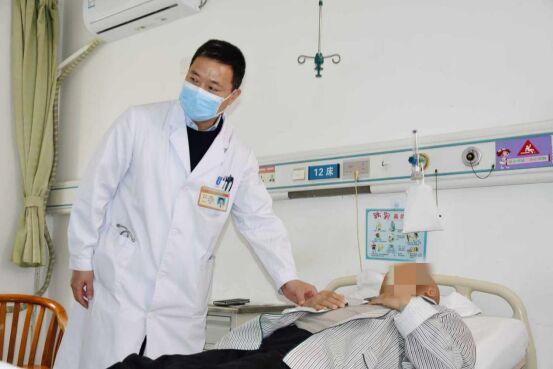
Professor Jia Zhenhua, a Qihuang Scholar and cardiopulmonary specialist at the hospital, assessed Mr. Zhang’s individual constitution and identified issues of qi stagnation and upward qi counterflow. Postoperatively, based on Tongbu Fangzhen Granules, the team customised the prescription and dynamically adjusted medication to support cardiac recovery. The granules centre on ‘raising ancestral qi’ to boost the body’s vital energy and promote normal qi and blood circulation, supplemented by herbs tonifying liver and kidney, thereby addressing the internal imbalance of qi and blood at its root.
Full-cycle care: treating the disease fundamentally and preventing future illness
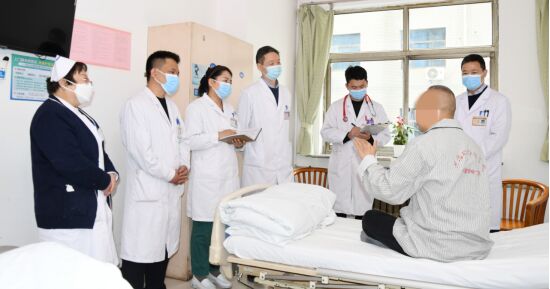
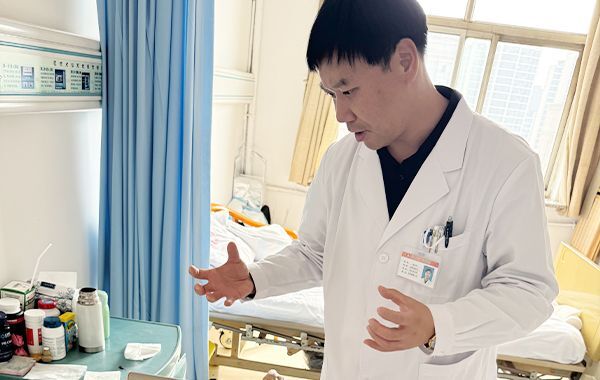
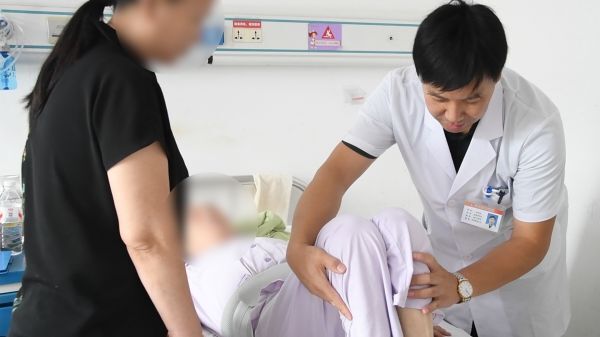
During the postoperative recovery period, the integrated Chinese-Western medicine expert team conducted regular ward rounds, continuously adjusting Mr. Zhang’s prescription based on syndrome differentiation. “Not only did the palpitations completely disappear, but many of my previous minor weaknesses also improved significantly,” said Mr. Zhang, who was very satisfied with the results of his long-distance medical journey as his indicators steadily improved.
Mr. Zhang has now successfully recovered and been discharged. Before leaving, he specifically requested a TCM prescription for ongoing qi and blood regulation. For him, this visit not only cured the present ‘manifest disease’ but also embodied the TCM philosophy of ‘treating illness before it arises,’ building a durable protective barrier for his heart health and giving him great reassurance.
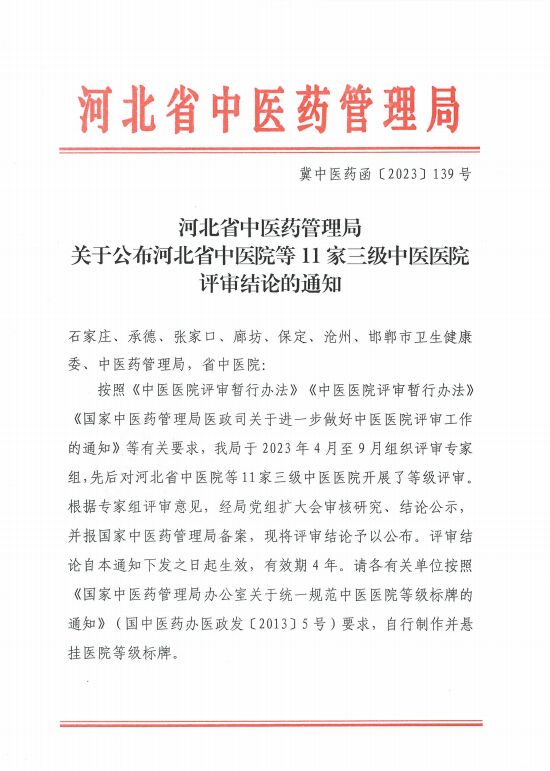
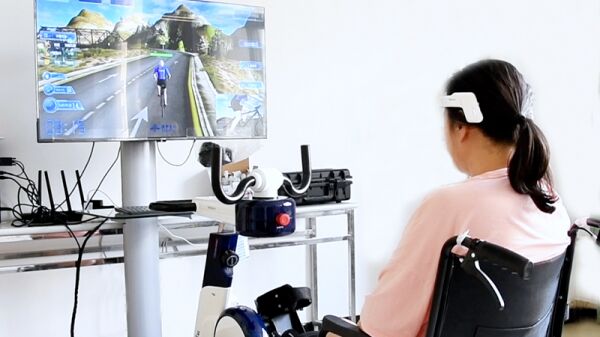
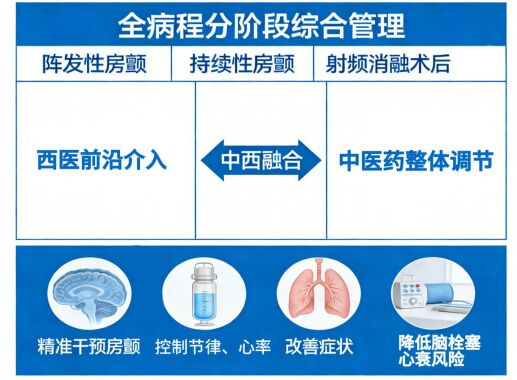
Relying on two major platforms — the National Key Clinical Specialty of Traditional Chinese Medicine and the National Regional TCM Cardiovascular Disease Diagnosis and Treatment Centre — Hebei Yiling’s AF Centre brings together elite academic and clinical forces from both Chinese and Western medicine. It integrates modern interventional techniques such as catheter ablation with holistic regulation via TCM preparations like Dansong Yangxin and Tongbu Fangzhen Granules, establishing a staged management system covering the entire AF disease cycle: actively controlling rhythm in paroxysmal AF patients to reduce episodes and restore sinus rhythm; stratified management of persistent AF patients to improve symptoms and quality of life; and holistic TCM regulation post-radiofrequency ablation to lower recurrence risk, alleviate residual symptoms, and protect cardiac function. This model breaks the traditional ‘one-size-fits-all’ treatment limitation, no longer viewing AF as an isolated arrhythmia but treating the patient’s overall physiological function comprehensively, effectively helping patients overcome suffering and return to a high-quality life.