Traditional Chinese Medicine Jinlida Reduces the Risk of Developing Diabetes
On June 3, 2024, local time in the United States, the paper “The Effect of Jinlida on Diabetes Prevention in People with Impaired Glucose Tolerance Combined with Multiple Metabolic Disorders—The FOCUS Randomised Clinical Trial,” authored by Professor Jia Zhenhua, President of Hebei Yiling Hospital, Academician Tong Xiaolin and Professor Lian Fengmei from Guang’anmen Hospital of the China Academy of Chinese Medical Sciences as co-corresponding authors, was published in the internationally authoritative medical journal JAMA Internal Medicine (impact factor 39).
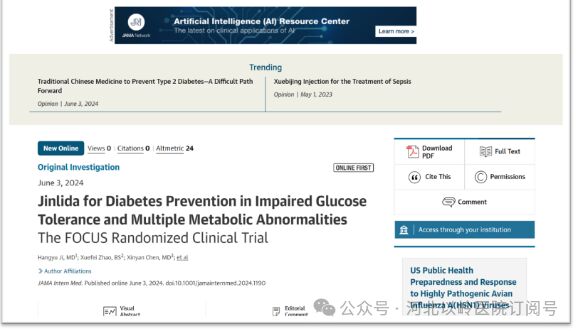
The paper presents significant findings on the intervention of Jinlida in patients with metabolic syndrome and impaired glucose tolerance—showing that Jinlida can reduce the risk of diabetes in people with impaired glucose tolerance combined with multiple metabolic disorders. This study is the first evidence-based medical research led by a Traditional Chinese Medicine (TCM) research team focusing on the risk of diabetes in populations with multiple metabolic disorders, providing new perspectives and strategies for diabetes prevention.
The study employed a randomised, double-blind, placebo-controlled, parallel-group, multicentre design, with diabetes incidence as the primary endpoint. Conducted from June 2019 to February 2023 across 35 hospitals in 21 cities in China, it enrolled 889 participants aged 18 to 70 years with impaired glucose tolerance combined with abdominal obesity and at least one abnormal metabolic syndrome indicator. Participants were randomised in a 1:1 ratio, with 885 included in the full analysis set (442 in the Jinlida group and 443 in the placebo group).
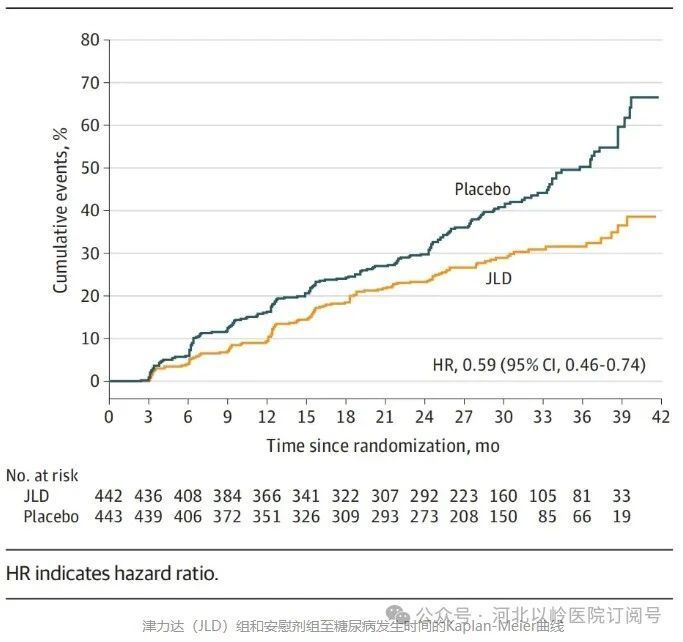
On the basis of standardised lifestyle interventions (including dietary adjustments and physical activity), participants took Jinlida or placebo orally at a dose of one sachet three times daily. The median follow-up period was 2.2 years. Results showed that compared with the placebo group, the Jinlida group had a significant 41% reduction in the risk of developing diabetes.
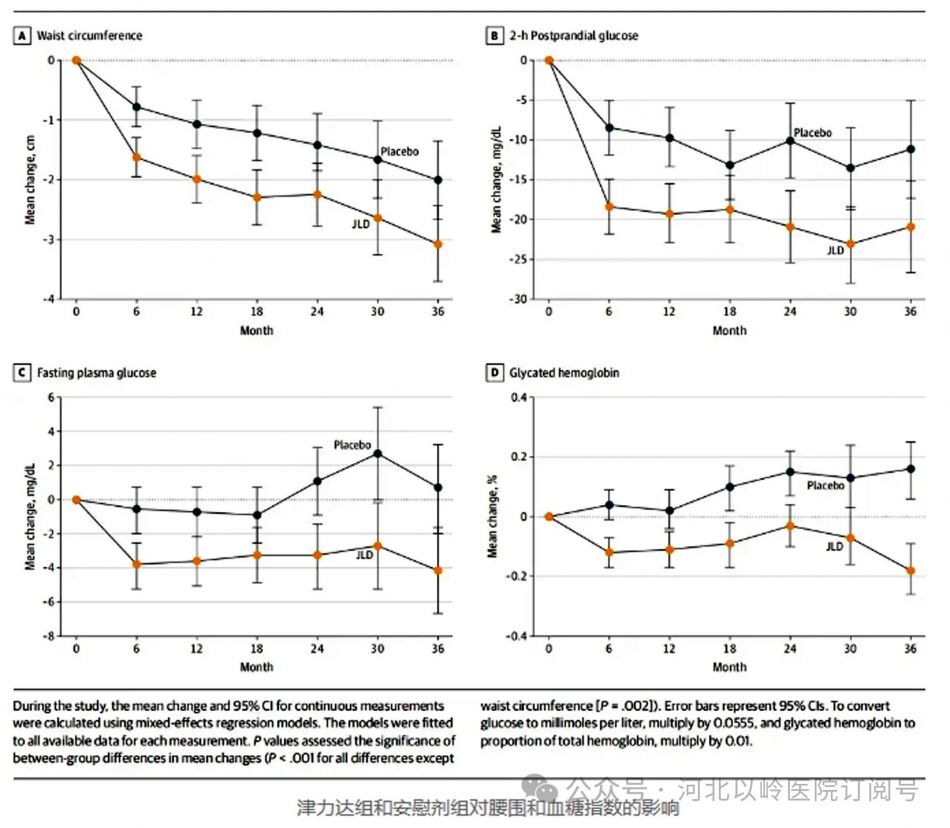
Additionally, compared with the placebo group, multiple metabolic abnormality indicators in the Jinlida group improved significantly, including waist circumference, body mass index, fasting blood glucose, 2-hour postprandial blood glucose, glycated haemoglobin, total cholesterol, low-density lipoprotein cholesterol, triglycerides, and insulin resistance index. Key arterial sclerosis indicators—ankle-brachial index and carotid intima-media thickness—also showed significant differences, indicating that Jinlida can reduce waist circumference and BMI, regulate glucose and lipid metabolism, improve insulin resistance, and ameliorate multiple metabolic disorders to protect blood vessels.
This study suggests that Jinlida can serve as an effective intervention to prevent diabetes onset and reduce vascular event risk in people with impaired glucose tolerance combined with multiple metabolic disorders.
The incidence of type 2 diabetes in China continues to rise, imposing a heavy burden on the public health system. Normal fasting blood glucose levels range from 3.9 to 6.1 mmol/L, and 2-hour postprandial blood glucose is less than 7.8 mmol/L. Diabetes is diagnosed when fasting blood glucose is ≥7.0 mmol/L, or 2-hour postprandial blood glucose is ≥11.1 mmol/L, or random blood glucose is ≥11.1 mmol/L, or glycated haemoglobin is ≥6.5%, accompanied by typical diabetic symptoms.
Impaired glucose tolerance is an intermediate state between normal blood glucose levels and diabetes, considered a prediabetic condition. It reflects a decline in the body’s ability to metabolise glucose; although abnormal glucose metabolism is present, it does not meet the diagnostic criteria for diabetes and often lacks typical clinical symptoms, frequently detected during physical examinations. Prediabetes is diagnosed when fasting blood glucose is between 6.1 and 7.0 mmol/L and/or 2-hour postprandial blood glucose is between 7.8 and 11.1 mmol/L. This population is regarded as the reserve army for diabetes. According to the “Expert Consensus on Prediabetes Intervention in Chinese Adults (2023 Edition),” the prevalence of prediabetes in China is as high as 35.2% and continues to rise.
Although studies have shown that intensive lifestyle interventions are fundamental to diabetes prevention and treatment, their practical application faces challenges, mainly due to difficulties in maintaining long-term adherence to lifestyle intervention programmes. Moreover, evidence supporting intensive lifestyle interventions in reducing cardiovascular disease risk remains insufficient. When impaired glucose tolerance coexists with obesity, dyslipidaemia, hypertension, and other risk factors, not only does diabetes risk increase further, but cardiovascular disease risk also rises by 34%. Therefore, exploring effective treatment strategies that combine lifestyle interventions with pharmacotherapy to delay diabetes onset and enhance vascular protection to prevent cardiovascular events is urgent.
This study is a subproject of the National Key R&D Program “Research on Systematic Intervention of Cardiovascular Event Chains Guided by the Collateral-Disease Theory of the Pulse and Network,” with Jia Zhenhua as the project leader and principal investigator.
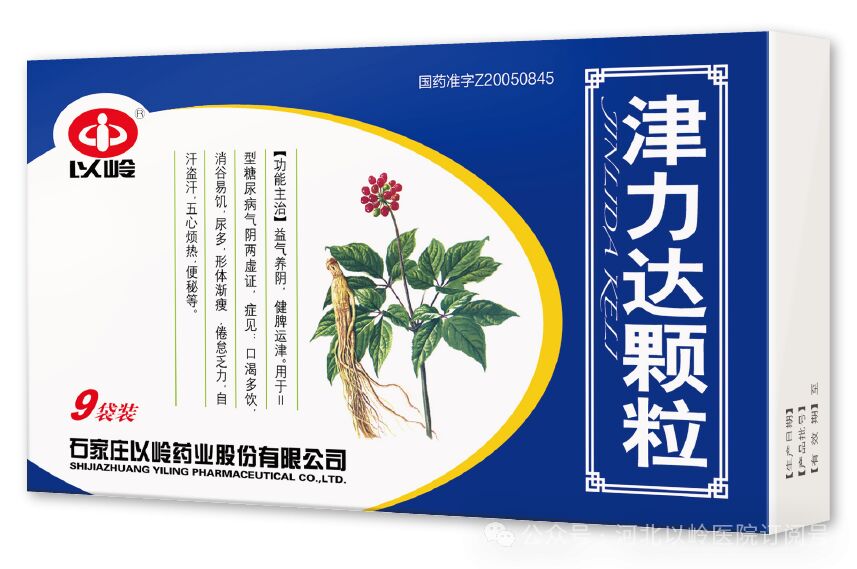
Jinlida granules, an innovative traditional Chinese medicine derived from an in-house preparation at Hebei Yiling Hospital, are guided by the collateral-disease theory and composed of 17 Chinese herbs including ginseng, Atractylodes, Eupatorium, Codonopsis pilosula, lychee seed, Sophora flavescens, Coptis chinensis, Polygonatum, Ophiopogon japonicus, Pueraria lobata, and Salvia miltiorrhiza. It has the effects of “tonifying qi and nourishing yin, strengthening the spleen and promoting fluid metabolism.” Approved by the China National Medical Products Administration in 2005 for the treatment of type 2 diabetes, previous clinical studies have found that Jinlida improves glucose and lipid metabolic disorders, lowers blood glucose and glycated haemoglobin, stabilises blood glucose fluctuations, and promotes blood glucose control, gaining wide recognition among clinicians.
A clinical study on Jinlida intervention in impaired glucose tolerance led by Professor Yang Shuyu of the First Affiliated Hospital of Xiamen University showed that Jinlida effectively controls blood glucose levels in patients with impaired glucose tolerance, increases the rate of conversion from impaired glucose tolerance to normal blood glucose (43.8% vs. 6.9%, P=0.001), and improves insulin resistance in this population, demonstrating potential advantages in preventing type 2 diabetes.
A clinical study involving 192 type 2 diabetes patients conducted by Academician Tong Xiaolin of the Chinese Academy of Sciences showed that for patients whose blood glucose remained uncontrolled on a stable dose of metformin, adding Jinlida granules further reduced glycated haemoglobin by 0.92%, lowered fasting and 2-hour postprandial blood glucose, significantly improved pancreatic β-cell function index, alleviated symptoms such as thirst, fatigue, and constipation, and had a favourable safety profile.
A clinical study on the effect of Jinlida granules on glycaemic variability in newly diagnosed type 2 diabetes patients led by Academician Jia Weiping of the Chinese Academy of Engineering showed that compared with the control group, the Jinlida group had a significant reduction in blood glucose standard deviation after treatment and a significant improvement in time in range (TIR). The TIR of Jinlida group patients increased from 55% before treatment to 79% after treatment, meeting the 2019 international consensus recommendation for TIR control targets in type 2 diabetes patients (>70%), thereby reducing the risk of microvascular and macrovascular complications.
With population ageing and lifestyle changes, diabetes prevention and control have become important tasks worldwide. Jinlida granules, as a traditional Chinese medicine compound preparation, have demonstrated efficacy and safety in rigorous clinical trials. The publication of this study marks the first clinical evidence-based trial proving that a Chinese patent medicine can reduce the risk of diabetes in this population. This breakthrough not only offers new perspectives to the medical community but also provides scientific evidence and effective interventions for diabetes prevention and control strategies, supporting the modernization and internationalisation of Traditional Chinese Medicine and bringing new hope to hundreds of millions of diabetes patients and high-risk populations globally.
Expert Profile

Jia Zhenhua, President of Hebei Yiling Hospital
Chief TCM Physician, Doctoral Supervisor
Qihuang Scholar, Expert Receiving National Allowance
★ Director of the National Key Clinical Specialty of Traditional Chinese Medicine (Cardiovascular Department) under the National Health Commission
★ Executive Deputy Director of the National Key Laboratory for Innovation and Transformation of Collateral-Disease Theory
★ Deputy Director of the Key Research Office on Collateral Disease under the National Administration of Traditional Chinese Medicine
★ President of the Collateral Disease Professional Committee of the World Federation of Chinese Medicine Societies
★ President of the Traditional Chinese Medicine Branch of the Chinese Geriatrics Society
★ Executive Director (Specially Appointed Vice President) of the Chinese Association of Traditional Chinese Medicine
★ Chair of the Collateral Disease Branch of the Chinese Association of Traditional Chinese Medicine
★ Chair of the Vascular-Collateral Disease Professional Committee of the Chinese Association of Integrative Medicine
★ Honorary Vice Chair of the Internal Medicine Branch of the Chinese Association of Traditional Chinese Medicine
★ He Liang He Li Science and Technology Innovation Award
★ Recipient of the Ministry of Science and Technology’s “Ten Thousand Talents Plan”
★ Qihuang Scholar under the National Administration of Traditional Chinese Medicine’s “Hundreds, Thousands, and Tens of Thousands” Talent Project for Inheritance and Innovation of Traditional Chinese Medicine
★ Leading Young and Middle-aged Scientific and Technological Innovation Talent of the Ministry of Science and Technology
★ Young and Middle-aged Expert with Outstanding Contributions of the National Health Commission
★ 11th China Youth Science and Technology Award
★ National Outstanding Science and Technology Worker
★ National Distinguished Professional and Technical Talent
★ Advanced Individual in the National Science and Technology System for Combating COVID-19
★ High-end Talent of Hebei Province, Outstanding Expert under Hebei Provincial Management
★ Most Beautiful Science and Technology Worker of Hebei Province
★ Leading Talent in Science and Technology Innovation of Shijiazhuang City, Top Talent under Municipal Management
He has led and participated in 10 national-level projects including multidisciplinary innovation teams in Traditional Chinese Medicine, National Key R&D Programs, the 12th Five-Year Major New Drug Development, and key projects of the National Natural Science Foundation. He has led 4 provincial and ministerial-level projects. He has received one first-class National Science and Technology Progress Award (ranked third), two second-class National Science and Technology Progress Awards (ranked first and third respectively), and three first-class provincial and ministerial science and technology progress awards (ranked first). He has published over 100 articles, authored 5 monographs, and 1 textbook.